The Art and Science of Paid Marketing: A Comprehensive Guide to Boosting Your Business
In the ever-evolving landscape of digital commerce, businesses are constantly seeking effective ways to stand out and reach their target audience. One powerful strategy that has become indispensable in today’s competitive market is paid marketing.
Whether you’re a seasoned marketer or a business owner looking to enhance your online presence, understanding the intricacies of paid marketing is crucial. In this comprehensive guide, we’ll delve into the world of paid marketing, exploring its various forms, strategies, and best practices to help you boost your business and maximize ROI.
I. Understanding Paid Marketing:
Paid marketing, also known as paid advertising, refers to the practice of paying to promote products, services, or brands through various online channels. The most common types of paid marketing include:
1. Search Engine Marketing (SEM): Utilizing paid search ads on platforms like Google to appear at the top of search engine results.
2. Social Media Advertising: Running paid campaigns on popular social media platforms like Facebook, Instagram, Twitter, and LinkedIn.
3. Display Advertising: Placing visual ads on websites, blogs, and apps to increase brand visibility.
4. Influencer Marketing: Collaborating with influencers to promote products or services to their followers.
Crafting an Effective Paid Marketing Strategy:
A. Define Your Goals:
Before diving into paid marketing, it’s essential to establish clear and measurable goals. Whether it’s increasing brand awareness, driving website traffic, or boosting sales, defining your objectives will shape your overall strategy.
B. Know Your Audience:
Understanding your target audience is fundamental to any successful marketing campaign. Conduct thorough market research to identify your audience’s preferences, behaviors, and pain points, allowing you to tailor your messaging accordingly.
C. Budget Allocation:
Allocate your budget strategically across different channels based on your business goals and target audience. Testing and optimizing your budget allocation over time will help you find the most effective channels for your specific objectives.
D. Keyword Research:
For SEM campaigns, thorough keyword research is crucial. Identify relevant keywords that align with your products or services to ensure your ads appear when potential customers search for related terms.
Paid Marketing Channels:

An Illustration about the different Paid Marketing Channels.
A. Search Engine Marketing (SEM):
1. Google Ads: Create targeted ads that appear at the top of Google search results. Utilize features like ad extensions and negative keywords for optimal results.
2. Bing Ads: Expand your reach by running ads on Microsoft’s Bing search engine, reaching users who may not use Google as their primary search engine.
B. Social Media Advertising:
1. Facebook Ads: Leverage Facebook’s vast user base and advanced targeting options to reach specific demographics based on interests, behaviors, and demographics.
2. Instagram Ads: Create visually appealing ads to engage with Instagram’s visually-oriented audience. Utilize Stories, Explore, and in-feed ads for maximum impact.
3. X Ads (Formerly Twitter): Promote your brand or products with promoted tweets, trends, or accounts, targeting users based on interests and demographics.
4. LinkedIn Ads: Target professionals and businesses with sponsored content, sponsored InMail, or display ads on LinkedIn.
C. Display Advertising:
1. Banner Ads: Design visually appealing banner ads to display on websites within your target audience’s interests.
2. Retargeting: Implement retargeting ads to reconnect with users who have previously visited your website but didn’t convert.
Creating Compelling Ad Creatives:
A. Ad Copy:
1. Crafting Attention-Grabbing Headlines: Create concise and compelling headlines that grab the audience’s attention and encourage further engagement.
2. Compelling Ad Descriptions: Write clear and persuasive ad descriptions that highlight the unique value proposition of your products or services.
B. Visual Elements:
- High-Quality Images: Use high-resolution images that showcase your products or services in the best light possible.
- Videos: Incorporate video content to increase engagement and convey your brand message in a more dynamic way.
Monitoring and Optimization:
A. Analytics Tools:
1. Google Analytics: Monitor website traffic, user behavior, and conversion metrics to gain insights into the performance of your paid campaigns.
2. Social Media Insights: Use built-in analytics tools on social media platforms to track engagement, reach, and conversion metrics for your paid ads.
B. A/B Testing:
Conduct A/B tests on different elements of your ads, such as headlines, ad copy, visuals, and targeting parameters. Analyze the results to refine your campaigns for optimal performance.
C. Adjusting Bids:
Regularly review and adjust your bidding strategy to ensure you’re getting the best value for your budget. Experiment with bidding strategies such as manual bidding, automated bidding, and target CPA bidding.
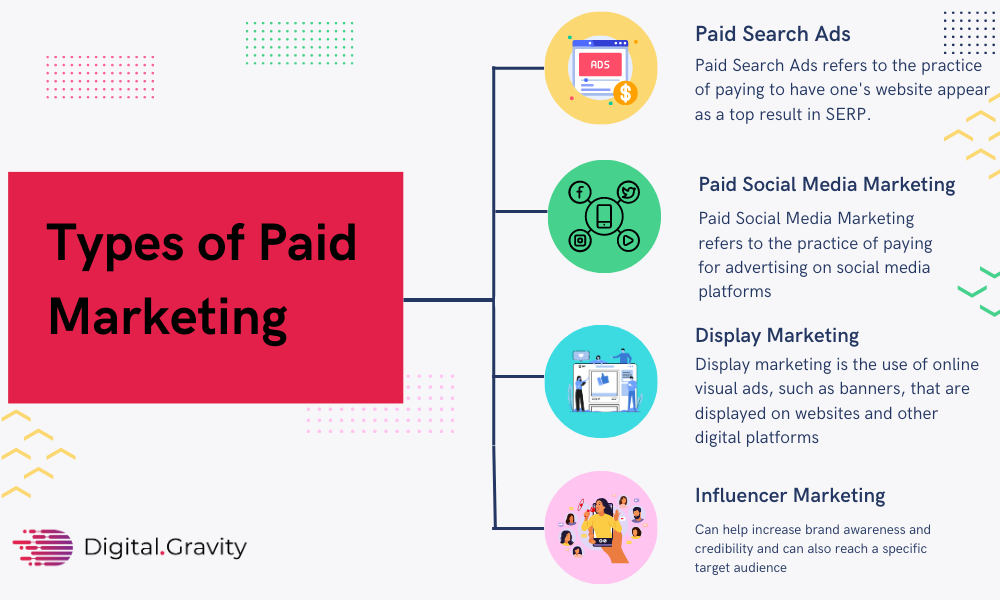
An Illustration about the Types of Paid Marketing. Source: DigitalGravity.
Overcoming Common Challenges of Paid Marketing:
A. Ad Fatigue:
Rotate your ad creatives regularly to prevent ad fatigue, ensuring that your audience remains engaged and interested in your offerings.
B. Budget Constraints:
If working with a limited budget, focus on channels that offer the best ROI for your specific business objectives. Consider starting small and gradually increasing your budget as you see positive results.
C. Staying Compliant:
Adhere to the guidelines and policies of each advertising platform to avoid potential issues with ad approval and account suspension.
World Case Studies of Paid Marketing:
Highlighting successful paid marketing case studies can provide real-world examples of effective strategies and inspire businesses to implement similar approaches.
- Facebook Ads: Facebook’s advertising platform is a juggernaut in the digital marketing space. With its sophisticated targeting options, businesses can tailor their ads based on demographics, interests, and behaviors.
- Google Ads: Google Ads dominates the online advertising landscape, allowing businesses to appear in search results when users look for relevant keywords.
- Instagram Influencer Marketing: Leveraging influencers on Instagram is another real-world example of paid marketing. Brands collaborate with influencers to tap into their engaged follower base, effectively promoting products or services.
This approach adds an authentic touch to marketing, as audiences often trust recommendations from influencers they follow.
Pros of Paid Marketing:
- Immediate Results:
- Pro: One of the most significant advantages of paid marketing is the speed at which it delivers results. Unlike organic methods, such as SEO, paid advertising can generate traffic, leads, and conversions almost instantly.
- Targeted Advertising:
- Pro: Paid marketing platforms often provide sophisticated targeting options. Advertisers can specify demographics, interests, and behaviors, ensuring their messages reach a highly relevant audience.
- Use AI algorithms to analyze customer data and behavior to identify target audiences more accurately. Integrating A.I to Paid Marketing, please read A.I for Paid Media.
- Implement programmatic advertising, where AI automates the buying of ads and targeting based on real-time data.
- Measurable ROI:
- Pro: Paid marketing allows for precise tracking and measurement of return on investment (ROI). Marketers can analyze metrics such as click-through rates, conversion rates, and cost per acquisition to assess the effectiveness of their campaigns.
- Brand Visibility:
- Pro: Paid marketing increases brand visibility and awareness. Displaying ads on popular platforms ensures that potential customers see the brand, even if they don’t make an immediate purchase.
- Flexibility and Control:
- Pro: Advertisers have control over their campaigns, allowing them to adjust budgets, targeting parameters, and ad creatives in real-time. This flexibility enables quick adaptation to changing market conditions.
Cons of Paid Marketing:
- Costs:
- Con: Perhaps the most obvious drawback of paid marketing is the associated costs. Running effective campaigns may require a substantial budget, and competition for ad space can drive up prices.
- Ad Blockers:
- Con: With the rise of ad blockers, many users actively avoid traditional display ads. This can diminish the effectiveness of paid marketing efforts, especially if the target audience is tech-savvy and frequently uses ad-blocking tools.
- Temporary Results:
- Con: While paid marketing can yield quick results, its impact is often temporary. Once a campaign ends, so do the benefits. This is in contrast to some organic methods that can provide long-term value.
- Trust Issues:
- Con: Consumers may view paid ads with skepticism, associating them with a sales pitch rather than genuine information. Building trust through paid advertising can be challenging, especially when compared to organic methods.
- Learning Curve:
- Con: To run successful paid marketing campaigns, businesses need to navigate through complex platforms, algorithms, and bidding systems. There’s a learning curve involved, and mistakes can be costly.
Please read the following LinkedIn article on How to Overcome Paid Advertising Challenges for Awareness.
Conclusion:
In the dynamic world of digital marketing, paid marketing stands as a powerful tool for businesses seeking rapid and targeted growth. By understanding the nuances of different paid channels, crafting compelling ad creatives, and continuously optimizing campaigns based on data-driven insights, businesses can elevate their online presence and achieve measurable success.
As technology advances and consumer behaviors evolve, staying adaptable and
informed will be key to unlocking the full potential of paid marketing in driving business growth. Please visit our blog page for more insightful blogs and articles about the digital marketing landscape.