The Ultimate Guide to Building a Lead Generation Strategy That Works in 2025

The Ultimate Guide to Building a Lead Generation Strategy That Works in 2025

The Lead Generation Crisis in 2025

If there’s one thing every growing business wants, it’s a steady stream of high-quality leads.
But here’s the hard truth: in 2025, lead generation has become more complex, competitive, and expensive than ever.

  • Ad costs are rising 20–30% year-over-year across Google and social platforms.

  • Buyers are self-educating, completing 60–80% of their journey before ever speaking to a sales rep.

  • Privacy laws in regions like the UAE and Kenya are reshaping how data is collected and how marketing teams engage with prospects.

  • And AI has transformed marketing — making it easier to create content, but also raising the bar for quality and personalization.

The result?
Many businesses are caught in what we call “random acts of marketing.”

They run ads without a cohesive plan.
They collect leads, but never follow up consistently.
They have traffic spikes but empty pipelines — and can’t figure out why revenue isn’t growing.

Here’s the reality:
A few scattered tactics won’t solve this problem.
What you need is a lead generation strategy — a systematic, measurable approach that aligns your marketing, sales, and operations into one growth engine.

This guide will walk you step-by-step through how to design, implement, and scale a lead generation strategy that consistently delivers qualified leads — without wasting budget or relying on guesswork.

By the end, you’ll know:

  • How to identify and attract your ideal customers.

  • Which offers and content truly convert.

  • The channels that deliver the highest ROI in 2025.

  • How to integrate AI and automation to scale effortlessly.

  • And how to track performance so you can grow smarter, not just faster.

Whether you’re an SME in Nairobi or a scaling startup in Dubai, these strategies will help you move from unpredictable lead flow to a predictable revenue engine.

Why Your Current Lead Generation Efforts Aren’t Working

Before we dive into the framework, let’s address the elephant in the room:
Why do most lead generation efforts fail?

We’ve analyzed hundreds of campaigns across industries in the UAE and Kenya and found five recurring patterns that block businesses from generating consistent, qualified leads:
Lead generation - FutureX Digital Solutions

1. Lack of Strategy (Random Acts of Marketing)

Most companies confuse activity with strategy.

They’re active — running ads, posting on social media, maybe even blogging — but none of these efforts are tied to:

  • Clear business goals

  • A defined customer journey

  • Or measurable ROI metrics

The problem: Marketing teams end up reacting instead of executing a plan, wasting time and budget.

2. Poor Targeting and ICP Clarity

Your lead generation is only as good as your ideal customer profile (ICP).

Many businesses fail because:

  • They target too broadly (“everyone is our customer”).

  • They don’t segment by buyer stage or intent.

  • Sales and marketing disagree on what a “qualified lead” looks like.

  • Without a well-defined ICP, your ads, content, and messaging are like casting a fishing net into the desert — you’ll never catch the right customers.

3. Offers That Don’t Convert

Getting someone’s contact information is a value exchange.
Too often, companies

  • Use weak CTAs like “Contact Us” or “Request a Demo” (too high commitment).

  • Offer generic PDFs that don’t solve urgent problems.

  • Fail to create problem-aware content that resonates.

Solution: Create a value ladder of offers

  • Low-friction content for top-of-funnel leads.

  • Mid-level offers for engaged prospects.

  • High-intent, sales-ready offers for conversion.

We’ll go deep into this later in the guide.

4. No Speed-to-Lead Process

Even with great offers, many leads are lost simply because no one follows up fast enough.

Some research shows that responding to a lead within 5 minutes can increase conversion rates by up to 400%

Yet in most businesses

  • Leads sit in inboxes for hours or even days.

  • Sales reps cherry-pick instead of following a defined process.

  • There’s no automation or alert system in place.

This delay costs real revenue — every single day.

5. Failure to Measure and Optimize

Finally, businesses often don’t track the right metrics.

They focus on “vanity metrics” like impressions or clicks instead of

  • Cost per qualified lead

  • Lead-to-customer conversion rate

  • Pipeline value by channel

  • Payback period and LTV/CAC ratio

Without accurate tracking, you can’t scale.
It’s like trying to drive a car at night with the headlights off.

The biggest obstacle isn’t competition or budget — it’s lack of structure.

What a Real Lead Generation Strategy Looks Like

Most businesses think they have a lead generation strategy when, in reality, they’re just doing a handful of marketing activities:

  • Running some ads

  • Posting on social media

  • Sending an occasional email

  • Hosting random promotions

While these actions can generate activity, they don’t create predictable growth.
And when results stall, it’s almost impossible to diagnose why because there’s no structure to measure or optimize.

Here’s the difference:
A true lead generation strategy isn’t just about tactics — it’s about creating a repeatable system that connects marketing, sales, and operations to consistently turn strangers into customers.

The Growth Equation: From Traffic to Revenue

To understand how to generate leads predictably, you need to see the entire funnel as a connected equation.

Each stage impacts the next:

Traffic → Conversion Rate → MQL Rate → SQL Rate → Close Rate → Average Deal Size → Revenue

Let’s break it down step-by-step.

1. Traffic: Attracting the Right Audience

This is the top of your funnel.
Your traffic sources might include:

  • Organic search (SEO) – capturing demand that already exists.

  • Paid ads – reaching targeted prospects quickly.

  • Social channels – LinkedIn, Instagram, or niche platforms.

  • Partnerships & referrals – leveraging other networks.

Key insight
It’s not just about getting more traffic.
It’s about getting the right traffic — people who actually fit your Ideal Customer Profile (ICP).

For instance, 1,000 random website visitors won’t matter if only 20 are potential buyers.

500 highly targeted visitors could generate far more revenue.

2. Conversion Rate: Turning Visitors into Leads

Once you have visitors, the next step is to convert them into leads.

This happens on:

  • Landing pages

  • Lead forms

  • Pop-ups

  • Chatbots

Benchmark
Across industries, the median landing page conversion rate is around 6.6%
Top performers see 10–15% or higher by focusing on clear messaging and strong offers.

Formula to calculate:

Conversions ÷ Total Visitors x 100

If 1,000 people visit your page and 50 sign up, your CVR is 5%.
Improving this by just 1-2% can have a massive revenue impact.

3. MQL Rate: Marketing-Qualified Leads

Not all leads are equal.

A Marketing Qualified Lead (MQL) is a lead who has shown interest and matches your ICP, but isn’t ready to buy yet.
For example:

  • Downloading a lead magnet

  • Attending a webinar

  • Engaging with multiple pieces of content

Your MQL rate is the percentage of raw leads who meet your initial qualification criteria.

4. SQL Rate: Sales-Qualified Leads

As leads move further down the funnel, some are vetted and become Sales Qualified Leads (SQLs).

These are the leads that:

  • Match your ICP perfectly

  • Have shown high intent

  • Are ready for a direct sales conversation

Goal
Ensure marketing and sales teams have clear, shared definitions of what qualifies as an SQL.
This eliminates hand-off issues and wasted effort.

5. Close Rate: Turning SQLs into Customers

This measures how effectively your sales team converts SQLs into paying clients.

Formula

New Customers ÷ Total SQLs x 100

If you have 50 SQLs in a month and 10 become customers, your close rate is 20%.

Improving this rate can be just as impactful as generating more leads — sometimes even more so.

6. Average Deal Size

Even if you’re closing deals, the value of each deal matters.

  • Small deals may require more volume to hit revenue targets.

  • Larger deals can support more growth with fewer leads.

7. Total Revenue

When you multiply all the steps above, you get your revenue potential.

Example Calculation

Funnel Stage Example Numbers
Monthly Visitors 5,000
CVR (6%) 300 Leads
MQL Rate (50%) 150 MQLs
SQL Rate (50%) 75 SQLs
Close Rate (20%) 15 New Customers
Average Deal Size ($1,000) $15,000 Revenue

With this model, you can identify exactly where the bottleneck is

  • If you’re not getting enough traffic, focus on awareness channels.

  • If your conversion rate is low, fix your landing pages and offers.

  • If your close rate is poor, improve sales enablement and follow-up.

Why This Framework Matters

By viewing lead generation as a connected equation, you gain:

Clarity: See where leaks and inefficiencies are happening.

Focus: Work on the stages with the biggest ROI impact first.

Scalability: Once each stage performs well, you can scale confidently.

This isn’t just theory — it’s the exact framework FutureX uses to help SMEs and scaling companies in the UAE and Kenya build predictable growth engines.

Foundation #1 — Customer Clarity (ICP + JTBD)

One of the biggest reasons lead generation strategies fail is poor targeting.
Businesses either cast their net too wide (“everyone is our customer”) or make assumptions about their buyers without data to back it up.

The result?

  • Low-quality leads that never convert.

  • High customer acquisition costs (CAC).

  • Frustration between marketing and sales teams.

Truth
If you don’t know exactly who you’re trying to attract and why, every step that follows — from ads to offers to nurturing — will be misaligned and wasteful.

To solve this, we start by defining two core elements

Ideal Customer Profile (ICP) — Who you’re selling to.

Jobs-To-Be-Done (JTBD) — Why they buy and what they’re trying to achieve.

Step 1: Build Your Ideal Customer Profile (ICP)

An ICP is a clear, data-driven description of your perfect customer — the type of company or individual most likely to buy, stay, and grow with you.

Think of it as the North Star for all lead generation decisions:

  • Who you target with ads and content.

  • Which channels you prioritize.

  • How you qualify leads in HubSpot or other tools you use

  • The messaging your sales team uses on calls.

Core Components of a Strong ICP

Here’s a framework FutureX uses when building ICPs for clients

Category What to Define Example for B2B (Kenya/UAE SME)
Firmographics Company size, revenue, industry, location Tech startups in Nairobi with 10–500 employees
Demographics Age, role, title, education Marketing Directors, Founders, Sales Leaders
Technographics Tools and software they use HubSpot, Google Analytics, Shopify
Pain Points Top challenges or blockers No consistent lead flow, manual marketing processes
Goals What they want to achieve 2x revenue growth in 12 months
Buying Triggers Events that make them ready to buy Expansion into new region, funding round
Budget Range Typical marketing spend $5,000–$20,000/month

How to Gather ICP Data

Don’t guess. Use data to create an accurate picture of your ideal customer:

Analyze your current best customers

Which ones generate the most revenue with the least friction?

Which industries and roles repeat?

Interview customers and prospects

Ask about their buying journey, challenges, and decision-making.

Sales team insights

Sales reps know which leads close easily vs. which ones stall.

Tools you use, like HubSpot reports

Use lifecycle data to identify patterns in conversions.

Tip: Revisit your ICP every 6–12 months as markets evolve, especially in fast-growing regions like UAE and East Africa.

Step 2: Understand Jobs-To-Be-Done (JTBD)

While an ICP tells you who to target, Jobs-To-Be-Done (JTBD) reveals why they buy.

The JTBD framework helps you step into your customer’s shoes and understand:

  • The “job” they’re hiring your solution to do.

  • The emotional triggers behind their decisions.

  • The desired transformation they want to achieve.

JTBD Formula

Here’s a simple way to structure JTBD statements

“When [situation], I want to [motivation], so I can [desired outcome].”

Example for FutureX client

When my company is ready to expand into a new region,
I want to generate high-quality leads and establish a digital presence quickly,
so I can prove ROI to investors and grow revenue sustainably.

Key JTBD Questions to Ask

To uncover your customers’ jobs, ask

  1. What problem were you trying to solve when you started looking for a solution?
  2. What was happening in your business at that moment?
  3. What alternatives did you consider before choosing a solution?
  4. What outcome or transformation were you hoping to achieve?
  5. What would success look like six months from now?

Combining ICP and JTBD

When you combine who your customers are (ICP) with why they buy (JTBD), you get a laser-focused targeting blueprint.

Example for a UAE-based SME growth campaign:

  • ICP:

    • Tech startup with 20–50 employees, $10k–$30k/month marketing budget.

    • Founder or Marketing Director makes decisions.

  • JTBD:

    • They want to attract investors and expand regionally.

    • They need consistent, qualified leads to prove traction.

    • They’re overwhelmed by fragmented marketing efforts.

Resulting Strategy:

  • Create a LinkedIn campaign targeting founders of startups in Dubai and Nairobi.

  • Lead magnet: “Market Expansion Blueprint: How to Enter New Regions with Predictable Growth.”

  • Nurture emails that show ROI case studies and steps to scale.

Practical Exercise: Create Your ICP + JTBD Grid

Use this simple 2-step framework:

Step Action Outcome
Step 1: ICP Worksheet Identify firmographics, demographics, tech stack, pain points, and buying triggers. Clear profile of target customers.
Step 2: JTBD Interviews Conduct 5–10 conversations with current or ideal customers. Insights into why they buy and what success looks like.

This becomes the foundation for all future lead generation decisions, including:

  • Which offers you create.

  • Which channels you prioritize.

  • How you qualify and route leads in CRM

Key Takeaway

Lead generation success starts with clarity.

  • ICP ensures you’re fishing in the right pond.

  • JTBD ensures you’re using the right bait.

Together, they create a powerful foundation for predictable, scalable growth.

Foundation #2 — Offers That Attract Qualified Leads

In today’s digital landscape, people are bombarded with marketing messages all day long:

  • Social feeds filled with ads.

  • Inbox cluttered with promotional emails.

  • Pop-ups and notifications on every website they visit.

So why would someone give you their contact information?

The answer is simple: value exchange.

The rule of lead generation:
The more value you provide upfront, the more likely people are to engage with you.

Your offer must solve a specific problem for your ideal customer — immediately and clearly — so they feel confident that engaging with your business will move them closer to their goal.

Why “Contact Us” Is Not an Offer

Too many businesses rely on generic calls to action like:

  • “Contact Us”

  • “Book a Demo”

  • “Request a Quote”

These are high-commitment steps for someone who may not know, like, or trust you yet.
It’s like proposing marriage on the first date.

Instead, think of your offers as stepping stones that guide potential customers through their buying journey, one small commitment at a time.

The Value Ladder Framework

The Value Ladder is a way to structure offers by the level of trust and commitment required from the prospect.

Stage Goal Offer Type Example for FutureX
Top of Funnel (TOFU) Build awareness & capture early interest Free, low-friction resources Downloadable checklist, free ebook, free tool, templates
Middle of Funnel (MOFU) Educate & nurture interest Higher-value content or interactive experiences Webinar, workshop, case study, strategy session
Bottom of Funnel (BOFU) Drive sales-ready actions Direct engagement offers Free audit, consultation, demo, proposal

Key Principle
Start with low commitment offers first, then gradually move toward higher commitment actions as trust builds.

Step 1: Top of Funnel (TOFU) Offers

These offers are designed to attract new leads who are problem-aware but not solution-ready.

Characteristics of TOFU Offers

  • Quick to consume (5–10 minutes).

  • Solve one specific pain point.

  • Free and easy to access.

    Why They Work
    They demonstrate expertise without overwhelming the prospect, giving them immediate value and a reason to share their contact details.

    Step 2: Middle of Funnel (MOFU) Offers

    Once someone has engaged with your TOFU content, they move into the consideration stage.

    Here, your goal is to educate, nurture, and build trust while positioning your solution as the best fit.

    Characteristics of MOFU Offers

    • More in-depth and personalized.

    • Help prospects evaluate their options.

    • Provide evidence of success.

      Why They Work
      These offers deepen the relationship, giving prospects the confidence to move closer to a buying decision.

      Step 3: Bottom of Funnel (BOFU) Offers

      BOFU offers target prospects who are ready to make a purchase decision.

      At this stage, prospects have already:

      • Identified their problem.

      • Explored possible solutions.

      • Shown strong buying intent.

      Characteristics of BOFU Offers

      • Direct, clear, and action-focused.

      • Aim to convert leads into customers.

      • Often tied to a direct sales call or demo.

        Building Offers That Actually Convert

        Here’s the 3-part formula for creating an offer that people can’t resist

        Identify the Core Pain Point

        Your offer must solve a specific, urgent problem.
        To find it

        • Look at your ICP pain points from Section 3.

        • Listen to what prospects complain about in sales calls.

        • Analyze form submissions for common themes.

        Example:
        Instead of a generic “Digital Marketing Guide,” focus on a specific pain point like

        • “7-Day Guide to Fixing Broken Sales Funnels”

        • “Checklist for Reducing Paid Ad Waste by 30%”

        Deliver Instant Value

        People want quick wins.

        Design your offer so the user gets an immediate “aha” moment

        • A checklist they can use today.

        • A template they can apply instantly.

        • A report they can read in under 10 minutes.

        Why this matters
        The faster they see results, the faster they’ll trust you with bigger commitments.

        Create Urgency Without Pressure

        Urgency drives action — but it must feel natural, not pushy.

        Ways to add urgency

        • Limited-time offers (“Sign up this week for a free audit”).

        • Exclusive content (“Available only to our community”).

        • Scarcity signals (“Only 10 free strategy sessions available this month”).

        Offer Optimization Tips

        Test multiple formats

        Some audiences prefer guides, others prefer video or interactive tools.

        Simplify your forms

        Only ask for essential fields at the first step (e.g., name and email).

        Gather more data later as trust builds.

        Use compelling copy

        Focus on transformation, not just features.

        Example: “Download our SEO template” → “Get the exact SEO template we used to 2x organic traffic in 90 days.”

        Add social proof

        Testimonials, logos, or mini case studies increase conversions by 20–30%

        Key Takeaway

        The right offer at the right stage builds trust and momentum.

        • TOFU offers attract attention.

        • MOFU offers educate and nurture.

        • BOFU offers convert and close.

        Together, they create a value ladder that turns strangers into loyal customers.

        Foundation #3 — Conversion Architecture

        You’ve defined your Ideal Customer Profile (ICP) and built irresistible offers — now you need a structure to convert visitors into leads at the highest possible rate.

        Think of your conversion architecture as the digital handshake between your business and a potential customer:

        • It sets the first impression.

        • It determines whether a prospect trusts you enough to share their information.

        • It guides them toward taking the next step in their journey.

        Fact
        A well-optimized landing page can boost conversion rates by 200% or more, without spending an extra dollar on ads

        Why Conversion Architecture Matters

        Here’s what happens when this piece is missing

        • Traffic goes to waste: Paid ads bring visitors, but few convert.

        • Sales teams complain: The few leads that do come through are unqualified or incomplete.

        • Marketing can’t scale: Without reliable conversion data, optimization is guesswork.

        By mastering conversion architecture, you stop leaking money and create a predictable flow of high-quality leads.

        The 3 Core Elements of Conversion Architecture

        Element Purpose Example
        Landing Pages Turn clicks into leads through focused messaging and design. Free audit sign-up page
        Forms Collect key lead data without adding friction. Name, email, company size
        CTAs Guide visitors to take the next step. “Download the Blueprint” button

        Step 1: Build High-Converting Landing Pages

        A landing page is not just a webpage — it’s a carefully crafted conversion tool.

        Here’s the ideal structure

        Landing Page Structure

        Section Goal Best Practice
        Headline Grab attention, state value clearly. Use results-driven language like “Generate Qualified Leads in 30 Days.”
        Sub-headline Clarify benefit in one sentence. “A free guide to fix your lead flow and double conversions.”
        Hero Visual Create instant relevance. Show a real dashboard, team photo, or guide cover.
        Social Proof Build trust fast. Add logos, testimonials, or stats like “Trusted by 50+ SMEs in UAE.”
        Pain + Solution Section Show you understand their problem and have a fix. Short bullet points of pain points + benefits.
        Offer Description Explain what they’ll get after converting. Be specific: “You’ll receive a 5-step blueprint with ready-to-use templates.”
        Form Collect minimal data to lower friction. 3–4 fields max at TOFU stage.
        Primary CTA Button Drive the main action. Use verbs: “Get the Blueprint,” “Book My Audit.”
        Guarantee/Reassurance Reduce last-minute hesitation. “Your privacy is safe. No spam ever.”
        Secondary CTA Capture hesitant visitors. Link to related content or case study.

        Best Practices for Landing Pages

        Clarity beats cleverness
        Avoid vague slogans. State exactly what they’ll get and why it matters.

        Single focus
        Each page should have one core goal and one CTA.

        Example: If the offer is a free audit, only push that audit.

        Speed matters
        Every second of load time drops conversions by 4–6%.
        Compress images and optimize code before publishing.

        Mobile-first design
        In Kenya and UAE, up to 80% of traffic may be mobile — design for small screens first.

        Trust signals
        Include

        • Customer logos
        • Security badges
        • Testimonials or review snippets
        • Data protection compliance

        Benchmark: Landing Page Conversion Rates

        Across industries

        • Median CVR: 6.6%

        • Good CVR: 10%

        • Excellent CVR: 15%+

        If your landing page is converting below 5%, you have a leaky funnel that needs immediate attention

        Step 2: Forms That Reduce Friction

        Your form is the gatekeeper to your funnel.

        Too often, businesses lose leads because forms are

        • Too long

        • Confusing

        • Lacking trust signals

        Golden Rules for High-Converting Forms

        Ask only for essentials

        • TOFU offers: name + email
        • MOFU offers: name, email, company
        • BOFU offers: name, email, company, phone, budget range

        Use progressive profiling

        • In your CRM, show different fields over time as a lead engages more.

        Explain why you need the information

        • Example: “We’ll use your company size to send relevant templates.”

        Visual reassurance

        • Add a mini privacy statement under the form

        “Your data is safe with us. Compliant with UAE PDPL and Kenya Data Protection laws.”

        Form placement

        • Keep it above the fold on desktop and easy to find on mobile.

        Form Types by Stage

        Stage Form Type Example Use Case
        TOFU Simple form Ebook download, free checklist
        MOFU Detailed form Webinar registration, case study access
        BOFU Qualification form Free audit, strategy session, demo request

        Step 3: CTAs That Drive Action

        A CTA isn’t just a button — it’s a psychological trigger.

        Bad CTA: “Submit”
        Good CTA: “Get My Free Growth Plan”

        Best CTA Practices

        • Be action-oriented:

          • Use strong verbs like Get, Start, Book, Download.

        • Highlight the benefit:

          • “Get More Qualified Leads Today” instead of “Submit.”

        • Create urgency (without pressure):

          • Example: “Only 10 free audits left this month.”

        • Test CTA placements:

          • Above the fold.

          • Mid-page.

          • Exit intent pop-ups.

        Key Takeaway

        Your landing page is not just a design — it’s a revenue engine.

        • A great offer attracts attention.

        • A seamless form removes friction.

        • A strong CTA drives action.

        • Fast follow-up closes the deal.

        Together, they turn traffic into qualified, sales-ready leads.
        How to Do SEO for a New Website: 9 Essential Steps

        You wouldn’t open a shop in the middle of nowhere without a signpost. But that’s exactly what launching a new website without SEO looks like.

        Many business owners, startups, and creators invest time and money building beautiful websites, only to realize—weeks or months later—that their site is invisible on Google.

        If your website isn’t showing up on search engines, you’re missing the most sustainable traffic source available: organic search. That’s where Search Engine Optimization (SEO) comes in.

        This in-depth guide walks you through how to do SEO for a new website, step by step. From setup to content to backlinks—we’ve covered it all, with insights from SEO experts and practical tool suggestions (including Semrush and other platforms).

        What is SEO for a New Website?

        SEO for a new website is the process of optimizing your site to appear in search engine results pages (SERPs). It ensures your target audience finds your pages when they search for relevant keywords.

        When done right from day one, SEO creates a strong foundation for long-term visibility, authority, and lead generation.

        The 9 Essential Steps to Do SEO for a New Website

        Step 1: Set Up Google Tools (Analytics + Search Console)

        Why it matters: You need to track performance and discover how Google views your site.

        Tools to Use:

        “Without these tools, you’re flying blind. Set them up on day one.” — Isaac Church, Technical SEO Expert

        Pro Tip: Link GA4 and GSC for unified insights.

        Step 2: Conduct In-Depth Keyword Research

        Why it matters: Every successful SEO strategy starts with understanding what your audience is searching for.

        What to Do:

        • Use long-tail keywords with clear intent

        • Map search intent: informational, navigational, transactional

        • Group keywords into clusters for better topic authority

        Tools to Use:

        • Semrush Keyword Magic Tool

        • Google Keyword Planner

        • Ubersuggest

        • Ahrefs, Moz, Surfer SEO

        “Start with 3–5 keyword themes that match your core offers.” — Ben Goodey, SEO Strategist

        Step 3: Plan a Clear Site Structure (Silo Structure)

        Why it matters: A clean, logical structure helps users and search engines navigate and index your site.

        Actionable Tips:

        • Use flat architecture (important pages accessible in ≤3 clicks)

        • Organize pages in silos: /fitness/strength-training/, /seo/on-page/

        • Use keyword-rich, descriptive URLs

        Tool Support:

        • Screaming Frog (to visualize site structure)

        • Semrush Site Audit for crawlability issues

        Step 4: Optimize On-Page SEO for Every Page

        Why it matters: On-page SEO ensures each page is primed to rank.

        Checklist per Page:

        • Title Tag with primary keyword

        • Meta Description with CTA + keyword

        • H1 with keyword, H2-H4 for structure

        • Keyword in URL and first 100 words

        • Internal links to related content

        • Alt text for images

        • External links to credible sources

        Tool Suggestions:

        • Semrush On-Page SEO Checker

        • Surfer SEO

        Step 5: Improve Technical SEO Health

        Why it matters: Technical SEO ensures that your site is fast, secure, mobile-friendly, and indexable.

        Checklist:

        • HTTPS (SSL Certificate)

        • Mobile-first design

        • Fast loading speed (under 2s)

        • Compress images, minify scripts

        • Add schema markup (LocalBusiness, Article, Product, etc.)

        • Set canonical URLs

        Tools:

        • Google PageSpeed Insights

        • GTmetrix

        • Semrush Site Audit

        • Screaming Frog

        Step 6: Create High-Quality, Intent-Driven Content

        Why it matters: SEO content is what attracts, informs, and converts.

        Best Practices:

        • Target a primary keyword and related entities

        • Cover the topic deeply to satisfy intent

        • Follow E-E-A-T principles

        • Use visual aids, examples, CTAs

        • Keep it updated

        Types of Content:

        • Ultimate guides, how-tos, FAQs

        • Case studies, comparison pages

        • Content hubs (pillar + cluster pages)

        Tools:

        • Google Trends + People Also Ask

        • Semrush Topic Research

        • Jasper.ai (for ideation)

        Step 7: Submit Sitemap and Robots.txt

        Why it matters: These files guide search engine crawlers.

        Action Items:

        • Create and submit an XML sitemap via Google Search Console

        • Use a robots.txt file to control crawl behavior

        • Make sure all important pages are indexed

        Tool Suggestions:

        • Yoast or RankMath (WordPress)

        • Screaming Frog

        Step 8: Build Backlinks from Authoritative Sources

        Why it matters: Backlinks signal trust, relevance, and authority.

        Strategies:

        • Guest posting

        • PR features / HARO

        • Linkable assets (infographics, stats, templates)

        • Business listings + niche directories

        Avoid: Spammy link farms, paid links

        Tools:

        • Semrush Backlink Gap Tool

        • Ahrefs, BuzzSumo

        • HARO (Help A Reporter Out)

        Step 9: Gain Brand Mentions (Linked & Unlinked)

        Why it matters: Google uses brand mentions as implicit signals of trust.

        How to Gain Mentions

        • Get interviewed

        • Collaborate with influencers

        • Participate in forums, roundups

        • Monitor unlinked mentions and request links

        Tools

        • Google Alerts

        • BrandMentions

        • Semrush Brand Monitoring

        Final Thoughts

        SEO is a long game, but starting strong makes all the difference. These 9 steps give your new website the visibility, technical foundation, and authority it needs to grow.

        What Makes a Backlink Valuable in Today’s SEO Landscape

        What Makes a Backlink Valuable in Today’s SEO Landscape

        Backlinks are still one of the strongest signals of trust and authority in search—and in today’s fast-evolving SEO landscape, how we approach them matters more than ever.

        As algorithms become more intelligent, backlinks have moved beyond being just a ranking shortcut. They now play a deeper role in how search engines measure credibility, topic relevance, and user value.

        This guide breaks down what makes a backlink valuable, the different types of backlinks, and where your focus should be to build long-term authority and performance.

        What Are Backlinks?

        A backlink, also as defined by BACKLINKO is a hyperlink from one website to another. When another website links to yours, it signals to search engines that your content is credible and worth referencing.

        But here’s the key: Not all backlinks are equal. A few high-quality, well-placed links can outperform dozens of low-value ones.

        Why Backlinks Still Matter Today

        Despite advancements in AI and semantic search, backlinks continue to:

        • Strengthen your website’s trust and authority

        • Help search engines discover and index your content

        • Improve your chances of ranking for competitive keywords

        • Drive referral traffic from relevant audiences

        • Support visibility in both general and local search results

        But for backlinks to truly support your growth, they need to be earned with intention—not volume.

        What Makes a Backlink Valuable Today?

        In 2025 and beyond, a valuable backlink has these core characteristics:

        1. Topical Relevance

        The linking website should be contextually related to your industry or niche.
        Relevance is more important than a generic high domain authority score.

        2. Contextual Placement

        Links placed naturally within high-quality content are more powerful than those hidden in footers, sidebars, or bios.

        3. Indexability

        If the page linking to you is not indexed by Google, the backlink won’t pass any SEO value.

        4. Traffic and Engagement

        Links from pages that users visit, read, and engage with send stronger signals to search engines than links on low-traffic pages.

        5. Trust and Editorial Integrity

        Links that are editorially placed or genuinely earned (not forced or bought) carry more weight and stand the test of time.

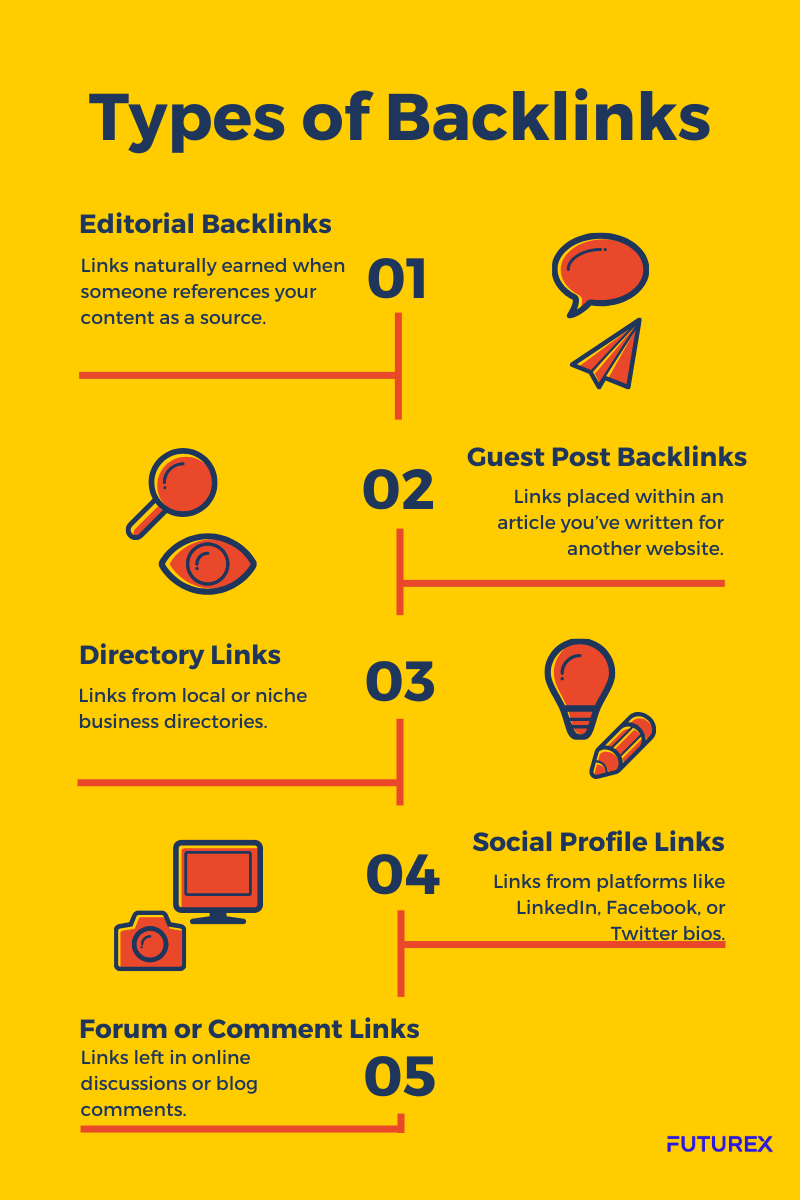
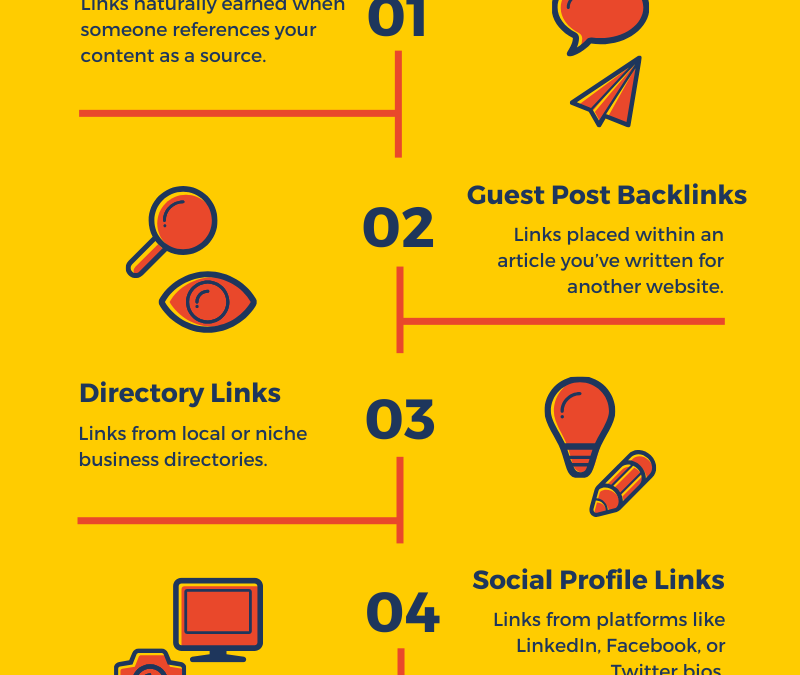
        Types of Backlinks

        Types of Backlinks –  And What They Mean for Your Strategy

        Understanding the different types of backlinks can help you focus your efforts where they’ll be most effective:

        Editorial Backlinks

        Links naturally earned when someone references your content as a source.
        🟢 High value – signals organic authority and trust.

        Guest Post Backlinks

        Links placed within an article you’ve written for another website.
        🟢 Valuable – if placed in-context, on quality platforms, and with a purpose beyond SEO.

        Directory Links

        Links from local or niche business directories.
        🟡 Useful for local SEO – when sourced from trusted, human-reviewed platforms.

        Social Profile Links

        Links from platforms like LinkedIn, Facebook, or Twitter bios.
        🔵 Supportive for indexing and discovery – but offer little ranking value on their own.

        Forum or Comment Links

        Links left in online discussions or blog comments.
        🔴 Low value – and risky if overused or on unmoderated forums.

        Sponsored Backlinks

        Paid or advertorial links that must be disclosed (rel=”sponsored”).
        🟡 Acceptable if transparent and relevant – but shouldn’t be your main strategy.

        Resource Page or Tools Links

        Links from curated lists of tools, templates, or helpful content.
        🟢 High long-term value – especially when tied to a strong lead magnet or unique asset.

        The Best Types of Websites to Get Backlinks From

        To build backlinks that actually support SEO, focus on websites that are:

        Relevant to Your Industry or Niche

        • B2B blogs

        • Trade publications

        • Sector-specific platforms

        Authoritative & Trustworthy

        • Business media (local or national)

        • Respected niche blogs

        • Partner platforms with established audiences

        Part of Your Local or Professional Ecosystem

        • Local directories

        • Chamber of commerce websites

        • Professional associations

        Open to Collaborations

        • Guest posting opportunities

        • Expert roundups

        • Podcast or webinar hosts

        Indexable and Active

        • Always check that the linking site and page are indexed by Google and consistently updated.

        What to Avoid

        To protect your domain authority and ranking potential, avoid:

        • Low-quality, spammy directories

        • Automated link-building schemes

        • Link farms or PBNs (private blog networks)

        • Overuse of exact match anchor text

        • Unindexed or low-traffic pages with no engagement

        Backlinks and the Future of SEO

        As AI and user-intent-based ranking systems evolve, backlinks are shifting from quantity-based metrics to signals of genuine trust and relevance.

        In short: Google is less interested in how many sites link to you—and more interested in who, why, and where.

        How FutureX Supports Strategic Backlink Growth

        At FutureX, we help businesses move beyond outdated link-building tactics.
        We focus on building authority through:

        • Auditing and cleaning up existing backlinks

        • Identifying high-trust, niche-specific opportunities

        • Creating valuable content assets worth linking to

        • Building long-term digital partnerships

        Our approach isn’t about volume. It’s about building trust and results—sustainably.

        Read More 

        How to Earn High-Quality Backlinks Without Cold Outreach or Spam Tactics

        Positioning Strategy: The Missing Link Between Attention and Conversion

        Positioning Strategy: The Missing Link Between Attention and Conversion

        Why do some brands with average design outperform those with a polished visual identity?

        How is it that one founder posts content that immediately clicks with their audience — while another, with better visuals and more effort, gets silence?

        In most cases, it comes down to positioning.

        If branding is your identity, positioning is your anchor — it determines where you stand in your market, who you resonate with, and how your value is perceived.

        In this guide, we’ll break down what positioning really is, why it’s often misunderstood, and how to build a positioning strategy that connects and converts.

        What Is Positioning?

        Positioning is the strategic process of defining how your brand fits in the mind of your target customer — relative to their needs and the alternatives available.

        A brand’s positioning should answer one powerful question:

        “Why should I choose you instead of anyone else?”

        When done right, positioning becomes the invisible force behind how people remember you, talk about you, and decide to work with you.

        It’s not a tagline or mission statement — it’s the underlying logic and relevance that powers your entire brand system.

        Positioning vs. Branding: What’s the Difference?

        Branding Positioning
        Focuses on perception and experience Focuses on strategic relevance
        Includes visual identity, tone, and brand promise Defines who you serve, the problem you solve, and your competitive angle
        Shapes how people feel about you Shapes how people understand your value
        Branding without positioning = noise Positioning without branding = confusion

        New to branding? Read: What Is a Brand, Really? How to Build One That People Trust and Remember →

        Why Positioning Is Often Overlooked — and Why That Hurts

        Many early-stage businesses skip positioning because

        • They confuse it with branding or messaging

        • It feels “invisible” — no visual payoff

        • They assume they can figure it out later

        But skipping positioning creates a ripple effect

        • Vague messaging that tries to please everyone

        • Content that doesn’t convert

        • Inconsistent audience engagement

        • Constant pivoting without progress

        Without positioning, even great marketing assets fall flat — because your audience can’t figure out why you matter to them.

        The Core Elements of a Positioning Strategy

        Here’s what a strong positioning foundation includes

        1. Target Audience Clarity

        Who are you for — specifically?

        Generic answers like “startups” or “business owners” don’t cut it. You need to understand your audience’s industry, mindset, pain points, and language.

        2. Core Problem (Tension Point)

        What is the one problem they care most about solving — right now?

        Strong positioning is rooted in felt need. The problem must be real, painful, and time-sensitive to create urgency and relevance.

        3. Your Unique Solution

        What do you offer that others don’t — or in a way others can’t?

        This doesn’t always mean your product is revolutionary — it could be how you deliver it, how it’s framed, or how you uniquely support transformation.

        4. Category or Frame of Reference

        What market are you playing in?

        Positioning is relative. You don’t position yourself in isolation — you position yourself in contrast to the available alternatives. Are you the premium option? The efficient one? The holistic one?

        5. Credibility Signal

        Why should they trust you?

        Your positioning is only as strong as your proof. That could be results, client examples, thought leadership, or your unique process.

        Real-World Example: Positioning at Work

        A digital wellness brand we supported had all the right branding elements — beautiful visuals, clean website, solid product.

        But they kept attracting low-quality leads and uncommitted customers.

        Why?
        Because they hadn’t positioned themselves clearly. Their audience didn’t understand what made them different — or why they should engage now.

        Once we clarified

        • The exact type of user they served best

        • The emotional trigger behind their offer

        • Their “angle” in the market (long-term health over fast results)

        Everything changed.
        Lead quality improved, retention increased, and messaging became focused — without changing the visuals.

        How to Develop Your Positioning Strategy (Step-by-Step)

        1. Interview 3–5 ideal clients or prospects

          • What were they struggling with before they found you?

          • What other solutions did they consider?

        2. Define your positioning statement
          Use the classic formula

          “We help [specific audience] achieve [outcome] without [painful alternative] by [your unique mechanism].”

        3. Map your competition
          Identify who else your audience considers and how you differ. Use this to strengthen your messaging.

        4. Align your team and platforms
          Ensure your website, email, sales decks, and content all reflect this positioning clearly and consistently.

        5. Test and evolve
          Positioning isn’t static. Test it in headlines, sales calls, or offers. Refine based on response.

        Final Thought

        You can’t own a space in your market if your audience doesn’t know what space you’re in.

        Branding makes people feel something.
        Positioning makes them choose.

        If your visibility isn’t converting — it’s time to revisit how your brand is anchored in your audience’s world.

         New here? Learn how branding and positioning work together : What Is a Brand, Really? →

        What Is a Brand, Really? How to Build One That People Trust and Remember

        What Is a Brand, Really? How to Build One That People Trust and Remember

        What if people were choosing your competitor — not because they were better, but because they were clearer?

        What if a skincare brand could charge double just because their audience feels like they’re buying confidence, not just cream?

        Or a consulting firm was winning clients with the same offer — simply because their brand made the value unmistakable?

        This is the hidden power of branding.
        Not just how you look — but how you’re remembered, trusted, and chosen.

        In this guide, we’ll unpack what a brand really is (hint: it’s not your logo), the core elements that make one work, and why clarity, consistency, and connection are your greatest assets.

        What Is a Brand?

        A brand is not your logo, color palette, or website — those are assets.

        A brand is the perception people carry about your business:

        It’s what they say when you’re not in the room. It’s the emotion they associate with your name. And most importantly — it’s the reason they choose you, stay with you, or refer you.

        Think of your brand as the total experience — how your business looks, sounds, feels, and behaves across every touchpoint.

        In a 2023 brand perception survey by Qualtrics, customers were 57% more likely to purchase from brands that delivered a consistent emotional and strategic message across all platforms.

        That’s what branding builds: meaningful connection, not just visual recognition.

        The Core Elements of a Brand

        To build that kind of connection, your brand needs more than design. It needs structure and strategy. Here’s what that looks like

        1. Visual Identity

        Your logo, color palette, and typography help shape first impressions. But on their own, they don’t build trust. They must be aligned with your deeper message.

        Visual identity is how people spot you — not why they choose you.

        2. Brand Voice & Tone

        This is how your business speaks — in captions, web copy, emails, or videos. Is your tone confident? Warm? Analytical? Your voice should reflect your values and attract your ideal customer.

        3. Brand Promise

        This is the consistent, credible value your brand commits to deliver. It’s what people should expect from every interaction with you.

        Example:

        Nike doesn’t just sell athletic wear — it promises motivation and personal power.

        4. Audience Perception

        This is where your brand lives: in the minds of your audience.
        What do people feel or expect when they see your name? Do they associate you with clarity, inspiration, premium service, or confusion?

        A strong brand doesn’t leave that to chance — it’s engineered through intentional storytelling, design, and experience.

        Why Branding Without Positioning Fails

        You can have great visuals and a polished message, but without positioning, your brand still lacks meaning.

        Positioning answers

        • Who exactly is this for?

        • What pain or problem are we solving?

        • Why is our solution uniquely valuable — right now?

        Without this, branding becomes noise.
        With it, branding becomes a conversion system.

        💡 We break this down in our companion blog: Positioning Strategy — The Missing Link Between Attention and Conversion →

        What a Strong Brand Looks Like in Action

        Clarity: Your audience knows exactly who you are and what you stand for
        ♦ Consistency: Every channel — your website, social media, and offers — aligns
        ♦ Connection: Your message resonates, emotionally and logically
        ♦ Trust: Your brand feels dependable, familiar, and valuable

        Example:
        A tech founder whose website, outreach, and personal posts all tell one clear story about solving a specific problem will gain trust faster than someone chasing trends with disconnected messages.

        How to Build a Brand That Works

        Start with your audience – Understand what they value, struggle with, and need to hear

        Define your brand promise – What do you deliver every time, without fail?

        Clarify your voice – Choose a tone and language that aligns with your personality and audience expectations

        Align all your platforms – Make sure your visuals, messaging, and offers say the same thing in different ways

        Be consistent, not static – Great brands evolve, but never confuse

        Final Thought

        Your brand isn’t your logo.

        It’s the clarity, consistency, and emotional resonance you create — over time — that earns trust and drives growth.

        Branding is your identity. But positioning is your foundation.

        Continue learning → Positioning Strategy: The Missing Link Between Attention and Conversion →

        Please enable JavaScript in your browser to complete this form.
        Full Name
        Opt-in Consent Checkbox: "I consent to receive marketing communications.

        This will close in 20 seconds