AI Tools That Are Reshaping SEO in 2025

AI Tools That Are Reshaping SEO in 2025

SEO in 2025 looks nothing like it did just a few years ago.

The days of simply stuffing pages with keywords, chasing backlinks, and waiting for Google to notice are behind us.
Today, the most effective SEO strategies are intelligent, adaptive, and powered by AI.

Why?

Because search behavior has changed.
Users expect faster answers, more personalized results, and seamless pathways from query to solution.
And search engines are responding — prioritizing intent, structure, and experience over outdated ranking tricks.

Instead of asking “How do I optimize this page?”, marketers now ask:
“How do I make this content predictably perform — and adapt in real time?”

That’s where a new class of tools has emerged — powered by machine learning, natural language processing, and predictive analytics.

These AI-enhanced SEO platforms don’t just tell you what to fix.
They show you why your content underperforms, and how to optimize for intent and impact, not just clicks.

Why AI Is Now Central to SEO Success

Search engines have evolved — and so has the game.

Ranking is no longer just about keywords and backlinks. It’s about how well your content aligns with what the user actually wants — and how quickly your site can adapt when behavior shifts.

That kind of speed and insight?
Impossible to achieve manually at scale.

This is where AI has become non-negotiable.

What Makes AI Different?

AI doesn’t just analyze content — it learns from patterns:

  • How users behave on similar content

  • What formats outperform others for specific queries

  • Which topics are rising (or falling) in relevance

  • Where your content starts to lose engagement — and why

Unlike traditional SEO tools that give you diagnostics,
AI tools predict, prescribe, and adapt — helping you stay competitive in real-time.

Top AI Tools Transforming SEO in 2025

Let’s look at the platforms making the biggest difference in how SEO is approached — not just in theory, but in execution.

These tools don’t just optimize content — they predict success, align with search intent, and automate insights so your team can act faster and smarter.

Here are the standouts we rely on (and recommend) at FutureX:

1. Surfer SEO

Known for real-time content analysis, Surfer benchmarks your page against top-ranking results and suggests:

  • Keyword density (smartly, not blindly)

  • Ideal headings and structure

  • Internal linking opportunities

  • Content gaps based on SERP behavior

It’s powerful for on-page optimization and crafting briefs that match real search intent.

2. MarketMuse

MarketMuse is less tactical, more strategic.

It helps with:

  • Content planning across entire topics, not just single blogs

  • Mapping out what your site should be ranking for

  • Identifying authority gaps in your content library

  • Scoring content based on depth, expertise, and competitive strength

Perfect for building topical authority.

3. Frase

Frase shines in content creation speed. It uses AI to:

  • Analyze top results

  • Create custom content briefs

  • Auto-generate blog outlines

  • Suggest questions, FAQs, and subtopics based on user queries

It’s a favorite when you need SEO + content strategy in one.

4. Clearscope

Think of Clearscope as a content quality grader.

It helps you:

  • Ensure content readability and clarity

  • Benchmark relevance for your target keywords

  • Maintain consistent tone and focus

  • Optimize long-form blogs and pillar pages with natural integration

Ideal for editorial SEO teams and scaling content without losing precision.

5. Outranking.io

Outranking blends structured AI writing with SEO analysis. Its strength lies in:

  • Creating detailed AI content outlines

  • Integrating Google NLP data

  • Tracking how content scores evolve post-publication

  • Automating revision plans when performance drops

Use this when you need structured SEO workflows and version control.

Bonus: ChatGPT + Semrush API Integration

Combine GPT’s language modeling with Semrush’s keyword and SERP data for:

  • Predictive SEO

  • Content rewriting at scale

  • Opportunity identification for new content clusters

Used right, it becomes your growth assistant on demand.

What These Tools Actually Do (Beyond Keywords)

Most traditional SEO tools focus on what is — current rankings, backlinks, and keyword volume.

But AI-powered SEO tools focus on what’s possible — helping you make smarter decisions before performance drops.

Here’s how the tools we explored above go beyond surface-level SEO and become strategic growth drivers

1. Reveal True Search Intent

AI tools analyze SERPs, user behavior, and query patterns to uncover what your audience really wants — not just the keywords they typed.

This helps you:

  • Match content to decision stages (research, compare, convert)

  • Identify gaps where your competitors are ranking but not serving intent

  • Build pages that answer what users would have asked next

2. Predict Content Performance — Before You Hit Publish

Instead of “publish and pray,” tools like MarketMuse and Clearscope score your content pre-publication based on:

  • Topic depth

  • Competitor analysis

  • Natural Language Processing (NLP) relevance

  • Readability and engagement benchmarks

You launch with confidence — not guesswork.

3. Guide You on Structure, Flow, and Internal Linking

AI doesn’t just say what to write — it helps you shape how you deliver it:

  • Suggesting optimal headers for clarity and engagement

  • Recommending internal links based on site hierarchy

  • Mapping content paths that keep users on your site longer

The result? A better user experience — and more conversions.

4. Monitor Content Decay and Trigger Smart Updates

Performance fades — but most businesses don’t know when or why.

Tools like Outranking and Surfer now:

  • Track ranking drops across clusters

  • Compare your content’s freshness and coverage

  • Recommend high-impact refreshes to protect rankings

This turns content from a one-time project into a living, revenue-generating asset.

5. Automate Content Briefs, FAQs, and CTA Suggestions

AI tools accelerate production while keeping quality high:

  • Build SEO-optimized content briefs in minutes

  • Generate FAQs aligned with “People Also Ask” data

  • Suggest CTA placements based on reader journey insights

Less guesswork. More strategic action.

Why It Matters

These tools don’t replace SEO experts.
They augment decision-making, reduce manual work, and surface opportunities that traditional tools miss.

At FutureX, we don’t just use these tools — we integrate them into intent-driven strategies that move traffic from passive to profitable.

Choosing the Right Tools for Your Business

With so many powerful AI tools available, it’s tempting to try them all.

But the truth is — you don’t need more tools. You need the right combination that aligns with your business goals, team capacity, and growth stage.

Here’s how to think strategically when choosing your AI-powered SEO stack

1. Start with Your Current Bottleneck

Are you struggling with

  • Low-quality traffic? → Use AI tools that map search intent (Frase, Surfer)

  • Content gaps or thin authority? → Go for topical strategy tools (MarketMuse, Clearscope)

  • Scaling blog production? → Leverage brief generators and content writers (Frase, Outranking)

  • Ranking drops over time? → Focus on content performance tracking (Outranking, Semrush AI)

Don’t invest in features you won’t use. Solve one key problem at a time.

2. Don’t Just Plug — Integrate

The most common mistake we see?

💡 Businesses using AI tools in isolation — without aligning them to a cohesive SEO strategy.

AI gives the insights, but strategy creates the outcomes.

  • Use content scoring to prioritize

  • Use search intent analysis to map clusters

  • Use refresh alerts to drive monthly updates

3. Match Tools to Your Growth Stage

Not every business needs enterprise-level SEO software.

Business Stage Recommended Tools
Startup Frase, Ubersuggest, Surfer SEO (lite plans)
Scaling MarketMuse, Clearscope, Semrush AI
Enterprise Full-stack integration with Surfer, Outranking, HubSpot CMS, internal AI dashboards

Tip: Focus on outcomes, not dashboards.

Need Help Choosing?

At FutureX, we work with founders, marketers, and business development teams to

  • Evaluate your current SEO strategy

  • Recommend the right AI tools for your size, team, and market

  • Integrate tools into workflows that are built for ROI

How FutureX Uses the Best AI Tools for SEO Audits

At FutureX, we don’t just run SEO audits — we deliver AI-Enhanced SEO Audits that drive strategy, not just diagnostics.

We’ve carefully selected the top-performing AI SEO tools based on their real-world impact, scalability, and ability to integrate intent, performance, and content structure. Here’s our stack — and why we trust it.

1. Surfer SEOFor Real-Time SERP Alignment

Why we chose it: Surfer SEO analyzes the top-ranking pages for any keyword and provides granular, data-backed recommendations on how to match or exceed them.
What it does:

  • Scores your page content in real time

  • Suggests ideal keyword usage and structure

  • Maps headings, images, and internal links to current SERP leaders

  • Helps you close the gap between visibility and top-position performance

We use it in audits to: Benchmark your content, identify structural mismatches, and optimize for quick-win opportunities.

2. MarketMuseFor Topical Authority & Content Depth

Why we chose it: It goes beyond individual keywords and evaluates your site’s strength across entire topics.
What it does:

  • Identifies high-potential content gaps

  • Scores your authority across semantically linked topics

  • Maps how to improve internal relevance and topical completeness

We use it in audits to: Strategize long-form content plans, create pillar-content maps, and guide scalable authority-building.

3. FraseFor Intent Mapping & User-Focused Briefs

Why we chose it: Frase is built around understanding and responding to real search queries — not just keyword matching.
What it does:

  • Analyzes top-performing content for user intent

  • Generates FAQ suggestions and People Also Ask-based content

  • Creates briefs that guide structure, tone, and relevance

We use it in audits to: Diagnose mismatched search intent and reframe content to match the user’s journey and query purpose.

4. Outranking.ioFor Predictive SEO & Content Decay Tracking

Why we chose it: SEO isn’t static. This tool continuously monitors content to prevent ranking drops before they happen.
What it does:

  • Tracks keyword volatility and decay signals

  • Scores content strength using Google NLP

  • Suggests real-time improvements and version updates

We use it in audits to: Flag at-risk content, set refresh priorities, and improve underperforming pages before they slip.

5. ClearscopeFor Readability, Precision, and NLP Alignment

Why we chose it: Clearscope makes sure your content is not only optimized — but understandable, clear, and comprehensive.
What it does:

  • Evaluates keyword relevance using natural language processing

  • Scores readability, clarity, and semantic coverage

  • Aligns your copy with both user comprehension and search engine parsing

We use it in audits to: Improve editorial quality, correct tone mismatches, and ensure high-scoring semantic depth.

Bonus: GPT + Semrush AI IntegrationFor Content Rewriting, Strategy, and Forecasting

Why we chose it: Combining OpenAI’s language strength with Semrush’s SERP data makes for a powerful growth intelligence layer.
What it does:

  • Identifies content opportunities through competitor gaps

  • Forecasts ranking potential based on topic trends

  • Generates conversion-friendly rewrites at scale

We use it in audits to: Support scalable rewrites, validate new topic opportunities, and simulate content impact pre-launch.

Why This Stack?

We didn’t pick tools based on popularity — we chose what drives predictive, conversion-oriented SEO for our clients.
Every audit we deliver is built on this foundation:

✔️ Data-backed
✔️ Intent-driven
✔️ Outcome-focused
✔️ Reviewed by humans — powered by AI

Conclusion

AI hasn’t replaced SEO — it has redefined it.

Where we once relied on static checklists and reactive updates, we now operate in a landscape where insights are instant, performance is predictable, and strategy can be automated without losing its human edge.

The right AI tools don’t just show you where you are — they show you where to go next and how to get there faster.

But remember: tools are just that — tools.

It’s what you do with them that counts.

At FutureX, we don’t chase trends — we create systems that bring together AI technology and human strategy to drive measurable, long-term growth.

Whether you’re:

  • Trying to improve content that isn’t converting,

  • Falling behind competitors who adopted AI,

  • Or just unsure where to start…

We’re here to support your growth intelligently — not overwhelm you with dashboards.

Other Reads
The Future of SEO with AI: Smarter Strategies That Convert

Why Keywords Aren’t Enough Anymore

The Future of SEO with AI: Smarter Strategies That Convert

The Future of SEO with AI: Smarter Strategies That Convert

The way people search is evolving — and so is the way search engines respond.

Today, it’s not enough to stuff pages with keywords or publish endless blogs. Google’s algorithms have matured. They now evaluate meaning, context, and user intent.

And just as search engines are becoming smarter, so must your SEO strategy.

Enter AI-powered SEO — a smarter, faster, and more predictive approach that helps businesses go beyond visibility to achieve clarity, engagement, and real conversions.

In this article, we’ll explore how AI is changing SEO, what that means for your brand, and how you can stay ahead by building a content system that doesn’t just attract traffic — but guides it toward action.

How AI Is Reshaping Search Behavior and Algorithms

Search engines no longer reward keyword repetition or surface-level optimization. Instead, they are built to understand meaning, context, and user goals — all thanks to the growing influence of AI within their core algorithms.

From Keywords to Context

Google’s updates like BERT, MUM, and now Search Generative Experience (SGE) mark a turning point in how search works. These models are trained not just to parse words, but to interpret the intent behind a query, even when it’s vague, incomplete, or conversational.

For example
A search for “best running shoes for bad knees” isn’t about footwear — it’s about pain relief, joint support, and trust.
An AI-powered search engine understands that nuance. Your content should too.

AI-Powered Search Is More Human-Centric

Search is becoming more natural, and SEO must evolve accordingly:

  • Users now search through voice, chat, or visual input (e.g., Google Lens)

  • They expect direct, structured, personalized answers

  • They are no longer typing fragmented keywords — they’re asking full questions

This shift means brands must move beyond ranking tactics to build content that understands, answers, and engages.

What This Means for Businesses

If your content is still built around traditional keyword lists, it likely:

  • Misses intent

  • Fails to guide action

  • Gets outranked by more dynamic, context-aware pages

To stay competitive, businesses must optimize for how AI interprets content, not just how humans search.

At FutureX, we build strategies that reflect this — combining AI tools with SEO expertise to align content with how people think, speak, and decide.

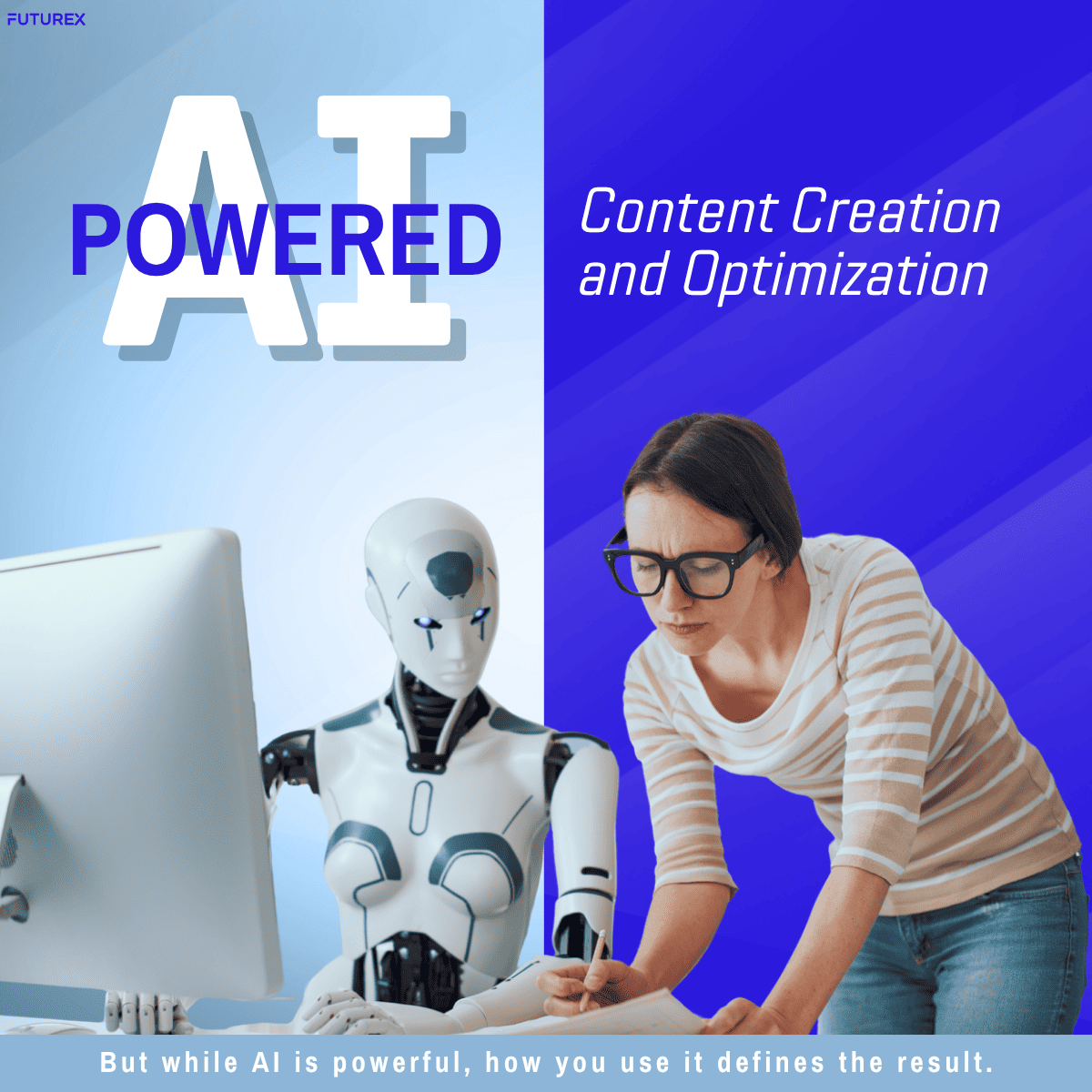
AI-Powered Content Creation and Optimization

The days of guessing what to write — or how to structure it — are over.

AI has introduced a new era of data-informed content creation, allowing marketers, founders, and SEO teams to produce smarter, faster, and more relevant content at scale.

But while AI is powerful, how you use it defines the result.

Writing Smarter, Not Just Faster

AI content tools like ChatGPT, Jasper, Copy.ai, and SEO-focused platforms like Surfer SEO, MarketMuse, and NeuronWriter are transforming how content is created.

These tools can:

  • Analyze top-performing SERPs

  • Suggest semantically relevant keywords and FAQs

  • Create structured outlines aligned with search intent

  • Evaluate readability, NLP (Natural Language Processing) scores, and topic coverage

Instead of guessing what to include in your blog or landing page, AI helps you reverse-engineer success — using real-time data.

Example:
Using MarketMuse, we can evaluate how deeply a topic is covered compared to competitors — and spot exact gaps in your content that might be hurting rankings.

AI + Human Creativity = The Winning Formula

While AI excels at structure and scale, it still lacks human qualities like:

  • Tone nuance

  • Brand personality

  • Strategic judgment

  • Emotional intelligence

That’s why at FutureX, we don’t just automate content — we optimize it through strategy, voice, and user journey mapping.

We use AI to accelerate the process — and human intelligence to ensure content aligns with business goals, solves problems, and builds trust.

What This Means for Your Business

If you’re not integrating AI into your content creation process, you’re likely:

  • Spending more time than necessary

  • Missing opportunities to match current search trends

  • Losing ground to competitors who are publishing faster and smarter

And if you’re using AI — but not optimizing what it creates — you may be ranking without converting, or worse, producing noise without meaning.

At FutureX, we use AI not to replace content creators — but to empower them with clarity, relevance, and speed.

Predictive SEO: Staying Ahead, Not Just Catching Up

Most businesses only react when rankings fall, traffic dips, or leads dry up.
But by the time you’re fixing what’s broken — you’re already losing opportunities.

That’s where predictive SEO comes in.

What Is Predictive SEO?

Predictive SEO uses AI and data modeling to:

  • Detect early signals of content decay

  • Forecast ranking drops before they happen

  • Identify emerging keywords and search trends

  • Recommend optimization before performance declines

Think of it as proactive SEO, driven by insights — not assumptions.

The Cost of Reactive Strategy

Without predictive tools, businesses often rely on outdated methods:

  • Refreshing content only after traffic drops

  • Guessing which pages to update or remove

  • Missing early-stage opportunities because no alerts were triggered

This reactive approach can mean:
❌ Weeks (or months) of lost leads
❌ Decreased visibility in key search journeys
❌ Increased content waste and SEO fatigue

Tools That Make Predictive SEO Possible

At FutureX, we use platforms like

  • Semrush – for visibility trend analysis, keyword shifts, and position tracking

  • MarketMuse – for detecting content decay and scoring topical authority

  • NeuronWriter – for competitor SERP movement and NLP scoring

  • Surfer SEO – for content scoring and audit recommendations tied to ranking potential

These tools allow us to identify what’s likely to underperform next — and optimize it before it becomes a problem.

The goal isn’t to chase the algorithm — it’s to stay one step ahead of it.

What This Means for Your Strategy

Predictive SEO turns your content into a living system — not a set-and-forget asset.
It gives you the ability to

  • Protect your most valuable pages

  • Maintain ranking stability in competitive niches

  • Grow consistently — without scrambling for fixes every quarter

At FutureX, predictive SEO is baked into every audit and content strategy we deliver.
Because staying competitive means seeing what’s next — not just what’s now.

Traffic and Conversion

Beyond Traffic: Building for Engagement and Conversion

High traffic doesn’t always mean high impact.

One of the most common challenges we see?
Websites that rank well — but fail to guide visitors into meaningful action.

This is where strategy must evolve from “getting found” to building content that moves: content that engages, directs, and converts.

From Clicks to Connection

Modern users don’t just consume content — they experience it.

They expect:

  • Seamless navigation

  • Clear next steps

  • Relevance at every stage of their journey

  • A sense that the brand “gets them” before asking for anything

If your content isn’t built with intent, clarity, and structure, most visitors will leave — even if the traffic source was perfect.

Structure Is Strategy

At FutureX, we approach content as a conversion pathway, not just an information piece.

Here’s how we optimize content to support results:

  • Header hierarchy that guides attention

  • Internal links that build topical authority and direct users to deeper value

  • Embedded CTAs aligned with each stage of the customer journey

  • Clean layouts that remove friction and reduce bounce rates

  • FAQs and contextual signals that support long-tail visibility and micro-moment engagement

These elements aren’t decoration — they’re part of a system that turns interest into intent, and intent into action.

AI’s Role in Supporting Engagement

AI helps us:

  • Analyze user behavior (scroll depth, drop-off points, heatmaps)

  • Predict which pages need stronger CTAs or clearer flow

  • Personalize content suggestions based on historical data and user segments

  • Continuously test and improve structure with minimal manual guesswork

This means your content isn’t just discoverable — it’s actively guiding decisions.

From Passive Readers to Qualified Prospects

The future of SEO is not just about visibility — it’s about value exchange.

What does your content offer in return for someone’s time?
How does it build trust before asking for a click, signup, or purchase?

The answers lie in how your content is built — not just written.

At FutureX, we develop systems that convert passive traffic into high-value opportunities — using strategy, structure, and smart automation.

What Businesses Should Be Doing Now

AI is no longer optional in SEO — it’s becoming the standard.

But adopting AI tools isn’t just about keeping up. It’s about building a smarter, more sustainable growth system — one that aligns with how people search, decide, and take action today.

Here’s how businesses can start evolving their content strategy now — and position themselves for long-term performance.

1. Start with an AI-Enhanced SEO Audit

Before producing more content or rewriting what exists, take a step back.
A smart audit will show:

  • Which pages are performing — and which aren’t

  • Where your content misaligns with search intent

  • What structural gaps are losing leads

  • Where optimization can deliver quick, measurable wins

At FutureX, we provide AI-powered audits that combine technical analysis, content performance, and predictive insights — tailored to your goals.

2. Optimize Around Search Intent, Not Just Keywords

Every piece of content should answer a real user need.
AI tools help identify those needs, classify them (informational, commercial, navigational), and recommend how to serve them with relevance and clarity.

If your content ranks but doesn’t convert — it likely doesn’t match intent.

3. Restructure for Flow, Guidance, and Action

Content that doesn’t lead anywhere leads nowhere.

Focus on:

  • Internal linking systems that guide deeper discovery

  • CTA placement that feels natural and supportive

  • Navigation that reflects how your audience thinks — not just your site map

These small changes can create massive impact on engagement and lead flow.

4. Use Predictive SEO to Future-Proof Performance

AI tools help you spot early declines, keyword shifts, and ranking threats — giving you time to adapt, rather than recover.

Make monitoring and optimization a proactive process, not a quarterly scramble.

5. Build a Content System, Not Isolated Posts

Topical clusters, pillar pages, FAQ-rich articles, and repurposed content aren’t just trendy tactics.
They’re how you build authority, structure, and discoverability over time.

Let AI inform the structure — and let your strategy give it purpose.

The brands that win in this new era of SEO will be the ones who understand one thing:

Traffic is not the goal. Strategic visibility, trust, and conversion are.

Conclusion: The Future of SEO Is Smarter — and Already Here

Search has evolved — and so must your strategy.

Ranking on Google is no longer about keywords alone. It’s about context, intent, structure, and speed. It’s about how effectively your content understands and supports your audience before asking them to act.

AI is not replacing SEO — it’s refining it.
And for businesses that embrace this shift, the opportunity isn’t just higher traffic — it’s meaningful, measurable growth.

What Comes Next?

If your website is generating visits but struggling to convert…
If your content isn’t aligned with how your audience actually searches…
Or if you want to future-proof your SEO with AI-driven insights…

We’re here to support you.

Reach out to info@futurxsolutions.com to receive a complimentary AI-Enhanced SEO Audit — tailored to your goals, your audience, and your current challenges.

This isn’t a generic report.


It’s a strategic starting point — built to help you see exactly where performance is slipping, where opportunities are hidden, and what your next smart move should be.

Because the future of SEO isn’t about doing more.

It’s about doing what works — intelligently, intentionally, and ahead of the curve.

#AISEO #FutureXDigital #SEOWithIntent #SmartGrowth #ContentThatConverts #PredictiveSEO #MarketingWithStrategy

How to Use Data-Driven Insights to Continuously Improve Your Website Performance

How to Use Data-Driven Insights to Continuously Improve Your Website Performance

How to Use Data-Driven Insights to Continuously Improve Your Website Performance

Introduction

The digital landscape is constantly evolving, and so is your website’s role in your business success. If you’ve been optimizing your website for a while, you might already know the basics of SEO and conversion optimization. But here’s the hard truth: most websites aren’t performing at their full potential. Why? Because data isn’t just a tool—it’s the framework that can continuously drive better results.

In this post, we’ll explore advanced data-driven strategies to push your website from being “just another site” to a growth engine. We’re not covering the basics; we’re diving into the insights that top-performing websites leverage to outperform the competition.

1. Going Beyond Analytics: Understanding User Behavior Through Actionable Data

You probably already track bounce rates and traffic sources. But these metrics alone won’t give you the granular insights you need. To truly optimize your website, it’s essential to look at user behavior at a deeper level.

Advanced Insight:

  • Heatmaps & Session Recordings: Tools like Hotjar or Crazy Egg let you visualize exactly where users click, scroll, and hesitate on your pages. This helps you pinpoint friction points—areas where users drop off or fail to engage.
  • Behavioral Segmentation: Segment your audience based on behavior patterns—e.g., high-value customers, cart abandoners, or frequent visitors. Then tailor their experience accordingly.

Pro Tip:
When you analyze session recordings, look beyond where users click—study the time spent on each page. Are they spending time on content that’s not performing? Could a design change improve interaction or readability?

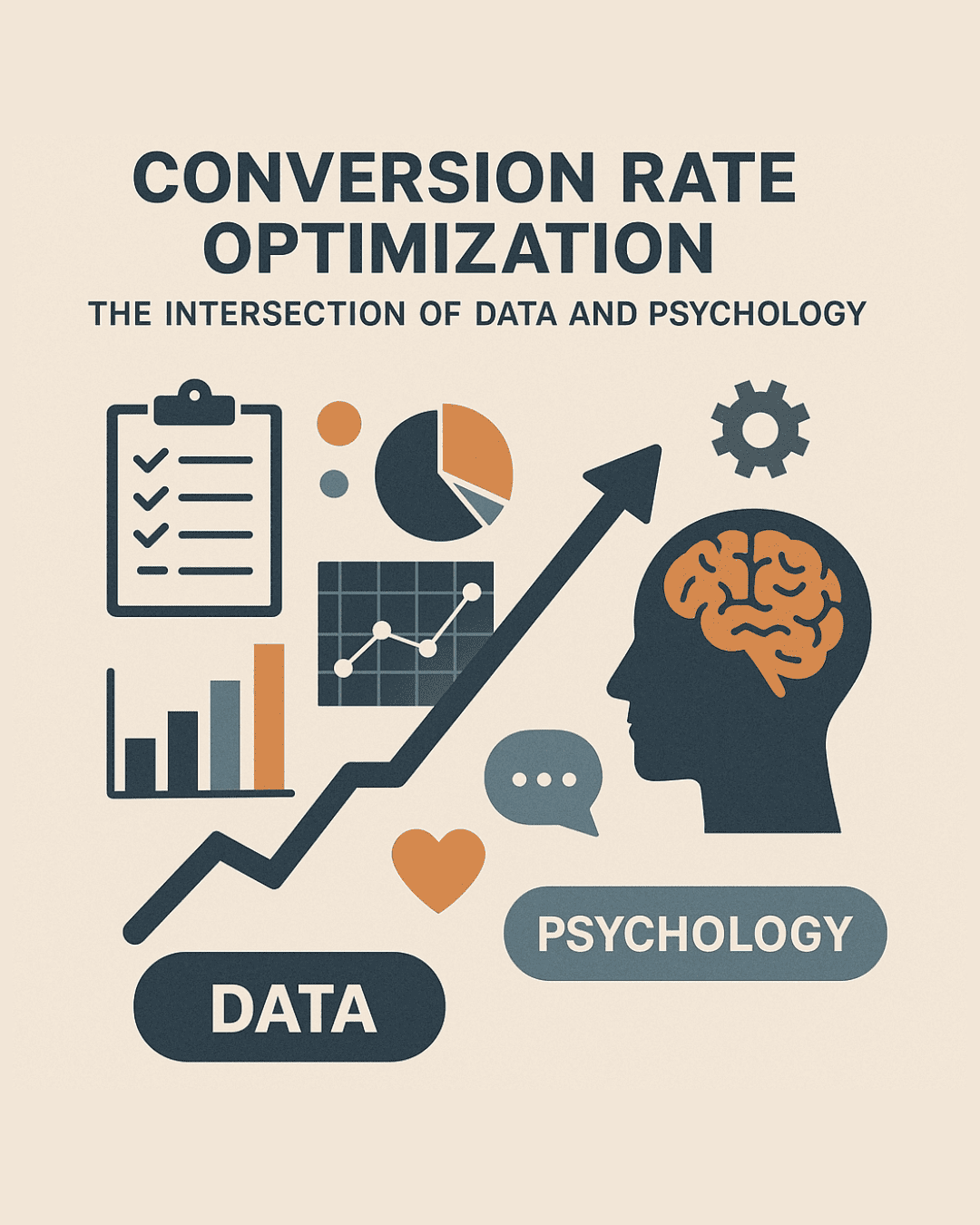
2. Conversion Rate Optimization: The Intersection of Data and Psychology

Conversion optimization is not just about A/B testing CTAs. It’s about understanding the psychology behind your users’ decisions.

Advanced Insight:

  • Cognitive Load: Simplify decision-making by reducing unnecessary steps. Data will tell you where your visitors get stuck, but understanding their mental model can help you remove friction.
  • Behavioral Cues: Use social proof, urgency, and scarcity to nudge users toward conversions. Data can tell you what elements perform best—then use those insights to design a seamless path to conversion.

Pro Tip:

Track multi-step conversion funnels. Where do visitors drop off between pages? Understanding this will give you powerful insight into user intent and how to structure a smoother experience.

3. SEO Beyond Keywords: Building a Search Experience That Converts

Traditional SEO focuses heavily on keyword ranking, but modern SEO is about user intent and providing a high-quality search experience. Your goal should be to rank not just for keywords, but for search queries that bring your ideal customers to your site and keep them engaged.

Advanced Insight:

  • Search Intent Mapping: Analyze not just the keywords that bring people to your site, but why they are searching. Match the content to their intent—whether they’re looking for information, solutions, or a product to buy.
  • On-Page Optimization Beyond Keywords: Utilize semantic search. Look at the related terms around your keywords. Google’s algorithm now understands context, so focus on creating content that satisfies user intent in depth.

Pro Tip:

Leverage topic clusters to group content by themes. This signals authority on certain subjects, improving rankings for related queries.

4. The Importance of Speed: Data Tells You, But Action Makes It Real

Website speed isn’t just a ranking factor—it’s a customer satisfaction issue. Studies show that every second of delay in loading time can result in higher bounce rates and lost conversions.

Advanced Insight:

  • Core Web Vitals: Focus on LCP (Largest Contentful Paint), FID (First Input Delay), and CLS (Cumulative Layout Shift). These metrics are essential for SEO and user experience. Use Google PageSpeed Insights to continuously monitor these vital elements.
  • Mobile Optimization: Ensure your mobile site speed matches your desktop performance. More users now browse on mobile than desktop, and if your site isn’t optimized, you’ll lose customers.

Pro Tip:

Implement lazy loading for images and videos to improve LCP. Monitor JavaScript execution times as large scripts can dramatically slow down page load times.

5.Performance-Driven Content: Data Tells You What Resonates, So Create More of It

Content is the cornerstone of any successful website, but it has to be data-driven to perform. Simply publishing blog posts isn’t enough—analyze what content is driving traffic and conversions, then scale it.

Advanced Insight:

  • Engagement Metrics: Beyond page views, look at metrics like scroll depth, social shares, and comments. These show how engaged visitors are with your content.

  • Content Personalization: Use dynamic content blocks to tailor the experience to different audience segments. For example, show different content to visitors based on their location, previous visits, or behavior.

Pro Tip:

A/B test headlines, images, and CTAs for your content. This will tell you what language or visual elements are most likely to drive action.

6. Putting It All Together: Continuous Improvement Through Data-Driven Decisions

Optimizing a website isn’t a one-time task—it’s a continuous process. By collecting and analyzing data, you can make small adjustments that lead to big improvements. Think of it as a cycle: gather data, implement changes, test, and measure the results.

Advanced Insight:

  • Automated Reporting: Set up automated reports to track key performance metrics, so you can quickly identify areas that need attention and implement improvements on the fly.

  • Feedback Loops: Use tools like surveys and customer feedback alongside your data to gain insight into user satisfaction and pain points.

Conclusion

Data isn’t just about numbers. It’s about understanding what drives user behavior and how to leverage that information to optimize every aspect of your website. By using data-driven insights, you can create a website that continuously improves—leading to more traffic, better engagement, and ultimately, higher conversions.

At FutureX, we help businesses like yours harness the power of data to continuously optimize their website and achieve long-term growth. If you’re ready to turn your website into a growth engine, let’s discuss how we can help.

Ready to take your website to the next level? Contact us for a free website & SEO audit today

The Startup Dilemma: No Funding, What’s Next?

The Startup Dilemma: No Funding, What’s Next?

Marketing in 2025 – It’s About to Go Down!

The startup landscape has always been challenging, but 2025 is shaping up to be a particularly rough year. With recent changes in U.S. policies affecting startups and venture funding, the ripple effects will be felt worldwide—especially in Africa, where many businesses rely on global investment and economic stability to grow.

So, what’s happening, how will it impact African businesses, and what can marketing do to help navigate these turbulent times? Let’s dive in.

The U.S. Policy Shift: How It Affects Startups Globally

Several key factors have led to an increasingly difficult funding environment for startups:

  1. Higher Interest Rates & Tighter VC Funding
    • The U.S. Federal Reserve has maintained higher interest rates, making borrowing more expensive. This has led to a decline in venture capital investments, as investors seek safer returns elsewhere.
    • Startups in Africa, which often rely on foreign investors, may struggle to attract the necessary funding.
  2. Stricter Immigration and Talent Policies
    • Stricter immigration laws in the U.S. mean fewer opportunities for international founders to secure funding or move operations abroad.
    • This creates a bottleneck for African entrepreneurs looking to tap into U.S. markets and investment networks.
  3. Increased Regulations on Tech & Data Privacy
    • Stricter U.S. regulations on tech startups—especially around data privacy and AI—mean African startups working with U.S. partners may face compliance challenges.
    • These regulations could slow down business expansion and increase operational costs.

The African Business Struggle: Why It’s a Big Deal

Africa has been an emerging hub for startups, especially in fintech, agritech, and e-commerce. However, with dwindling U.S. funding and stricter regulations, businesses on the continent face a few key struggles:

  • Limited Access to Capital – With VC firms slowing down investments, African startups will need to explore alternative funding sources.
  • Increased Competition for Local Investment – As foreign funds shrink, African investors will be overwhelmed with pitches, making it harder for startups to stand out.
  • Dependency on U.S. Tech Infrastructure – Many African businesses rely on U.S.-based platforms (AWS, Google Cloud, etc.), and rising costs or restrictions could negatively impact operations.

What Can We Do? The Marketing Solution

While the funding landscape is shifting, marketing remains one of the most powerful tools for startups to survive and thrive. Here’s how:

1. Pivot to Local and Regional Markets

  • Instead of relying on U.S. investors, startups should focus on strengthening their presence in African markets.
  • Marketing campaigns should highlight “Made in Africa” solutions and appeal to homegrown investors.

2. Leverage Growth Hacking & Community-Driven Marketing

  • Growth hacking strategies, such as viral campaigns, referral programs, and user-generated content, can reduce customer acquisition costs.
  • Community-driven marketing can help brands build loyalty and word-of-mouth traction without spending excessively on ads.

3. Maximize AI & Automation in Marketing

  • AI-driven marketing tools can help startups optimize budgets, improve targeting, and enhance personalization.
  • Automating repetitive marketing tasks can help lean teams do more with fewer resources.

4. Emphasize Partnerships & Collaborations

  • Strategic partnerships with African businesses, influencers, and content creators can drive visibility and credibility.
  • Cross-promotions and co-marketing initiatives can help startups expand their reach at minimal cost.

5. Focus on Brand Storytelling

  • In a crowded market, a compelling brand story can differentiate a startup from competitors.
  • Using storytelling in content marketing (videos, blogs, and case studies) can emotionally connect with customers and investors alike.

Conclusion: Adapting to the Shift

While the funding situation may seem bleak, African startups still have opportunities to innovate, adapt, and scale. By focusing on strategic marketing, building strong local networks, and leveraging digital tools, businesses can weather the storm and emerge stronger.

The future of startups in Africa isn’t about waiting for international investors—it’s about creating value, solving real problems, and using marketing to amplify impact.

Are you ready to shift gears and take your startup to the next level despite the funding drought? Let’s make it happen!

Empowering Women-Led Businesses Through Digital Transformation

Empowering Women-Led Businesses Through Digital Transformation

From Frustration to Flow: How a Woman-Led Business Firm Transformed Its Website & Payments

In today’s fast-paced digital world, businesses thrive when they can provide seamless experiences for their clients. But what happens when technology becomes a roadblock instead of an enabler? This is the challenge one woman-led business firm faced before partnering with FutureX to overhaul its digital presence.

The Challenge: When Tech Holds Women Entrepreneurs Back

The Business firm had built a solid reputation for its top-tier recruitment and people management services. However, despite their expertise, they faced a frustrating obstacle—an inefficient payment system and a slow, underperforming website. Their clients loved their services, but making payments was cumbersome, and the website didn’t convert visitors into leads effectively.

“We know we’re great at what we do, but our website and payments are holding us back,” the founder shared.

For many women entrepreneurs, digital barriers are more than just technical issues—they represent a deeper socio-economic challenge. Limited access to capital, structural barriers, and digital transformation gaps disproportionately affect women-led businesses, making it harder for them to scale and compete.

The FutureX Solution: Smart, Scalable Digital Upgrades

Understanding these challenges, we took a strategic approach to digital transformation:

Seamless Payment Integration – We implemented a secure, user-friendly payment system that made transactions effortless, increasing client satisfaction and ensuring smoother cash flow.

Website Audit & Optimization – Conducted a deep performance, UX, and conversion audit, pinpointing where the site was slowing down business and fixing issues that hampered growth.

Conversion-Focused Enhancements – Optimized the site’s structure, speed, and content strategy to attract, engage, and convert more visitors into paying clients.

The Impact: Economic Empowerment Through Digital Growth

Increased Revenue – With a frictionless payment process and a website that converts, the firm saw more inquiries, faster transactions, and higher client retention.

Enhanced Customer Experience – A seamless user journey meant clients could access services effortlessly, boosting trust and satisfaction.

Business Growth & Economic Empowerment – A thriving woman-led business means greater community impact, more job opportunities, and a step towards closing the digital and financial gender gap.

Why This Matters: Digital Access as a Path to Socio-Economic Equality

Women-led businesses are a powerful engine for economic growth. Yet, without the right digital tools, many are held back from reaching their full potential. By bridging the digital divide, we enable more women entrepreneurs to scale, compete, and succeed in today’s economy.

At FutureX, we believe in tech that empowers, not limits. Every business—especially those led by women—deserves access to the best digital solutions to fuel their growth.

🚀 Want a FREE website audit? Let’s optimize your site for success. Contact us today!

#FutureX #WomenInBusiness #EconomicEmpowerment #BusinessTech #DigitalTransformation #WebsiteAudit #MarketingForGrowth

Please enable JavaScript in your browser to complete this form.
Full Name
Opt-in Consent Checkbox: "I consent to receive marketing communications.

This will close in 20 seconds