In the rapidly evolving landscape of digital marketing, creating a positive and seamless User Experience (UX) has become more than just a trend—it’s a fundamental necessity. As businesses strive to connect with their audiences in the digital realm, understanding and prioritizing UX has emerged as a key determinant of success. Please read the following Indeed blog: User Experience (UX) in Digital Marketing.
Defining User Experience (UX) in Digital Marketing
1. What is UX?
User Experience encompasses the overall interaction that users have with a product, system, or service. In the context of digital marketing, UX refers to the quality of the user’s experience when interacting with a website, application, or any other digital platform. It involves various elements, including usability, accessibility, design aesthetics, and overall user satisfaction.
2. Key Components of UX in Digital Marketing
Usability: The ease with which users can navigate and interact with a digital platform.
Accessibility: Ensuring that the digital experience is inclusive and can be accessed by users of all abilities.
Visual Design: The aesthetics of the interface, including color schemes, typography, and overall visual appeal.
Information Architecture: Organizing and structuring content in a logical and user-friendly manner.
Performance: The speed, responsiveness, and reliability of the digital platform.
User Feedback: Gathering insights from user interactions to make informed improvements.
The Significance of UX in Digital Marketing
Impact on Conversion Rates
A positive UX directly influences conversion rates. Whether the goal is to drive sales, capture leads, or encourage specific actions, a well-designed and user-friendly interface can significantly enhance the likelihood of conversion. Conversely, a poor UX can lead to high bounce rates and lost opportunities.
Building Brand Loyalty
A seamless and enjoyable digital experience fosters trust and loyalty. Users are more likely to engage with and return to a brand that consistently provides a positive UX. Word-of-mouth recommendations and positive online reviews often stem from exceptional digital experiences.
Search Engine Optimization (SEO) Benefits
Search engines, such as Google, consider user experience as a ranking factor. Websites with better UX are more likely to rank higher in search results, driving organic traffic and increasing visibility. Prioritizing UX aligns with the principles of SEO best practices.
Reducing Bounce Rates
A high bounce rate, where visitors quickly leave a website after arriving, can be indicative of a poor user experience. By optimizing UX, businesses can create engaging and relevant content that encourages users to stay longer, explore, and ultimately convert.
Enhancing Customer Satisfaction
Customer satisfaction is a key metric for business success. A positive UX contributes to overall customer satisfaction by meeting user expectations, providing valuable content, and simplifying complex processes.
10 Strategies for Optimizing User Experience in Digital Marketing
1. Understand Your Audience
Understanding the target audience is the foundation of creating a meaningful user experience. Conducting user research, analyzing demographics, and identifying user personas enable businesses to tailor their digital strategies to meet the specific needs and preferences of their audience.
2. Mobile-First Design
With the increasing use of mobile devices, adopting a mobile-first approach is essential. Websites and applications should be designed with mobile users in mind, ensuring responsiveness, intuitive navigation, and a seamless experience across various screen sizes.
3. Intuitive Navigation and Information Architecture
A well-structured information architecture and intuitive navigation are critical for a positive user experience. Users should be able to easily find the information they seek without unnecessary clicks or confusion. Clear menus, logical categorization, and user-friendly navigation paths contribute to an effective UX.
4. Optimize Page Load Times
Page load times significantly impact user satisfaction. Slow-loading pages can lead to frustration and increased bounce rates. Optimizing images, leveraging browser caching, and utilizing Content Delivery Networks (CDNs) are strategies to enhance page load speed.
5. Personalization
Personalizing the user experience based on user behavior, preferences, and demographics can greatly enhance engagement. Personalized content, recommendations, and tailored user journeys create a sense of individualized attention and relevance.
6. Clear and Compelling Calls-to-Action (CTAs)
Well-designed CTAs guide users toward desired actions. Whether it’s making a purchase, subscribing to a newsletter, or filling out a form, CTAs should be prominently displayed, visually appealing, and clearly communicate the value proposition.
7. User Feedback and Iterative Improvement
Gathering user feedback through surveys, usability testing, and analytics tools is crucial for understanding pain points and areas for improvement. Implementing a feedback loop and consistently iterating based on user insights contribute to an ongoing enhancement of the digital experience.
8. Accessibility for All Users
Ensuring that digital platforms are accessible to users with diverse abilities is not only ethical but also good business practice. Accessibility features, such as alt text for images and keyboard navigation, make digital experiences inclusive and cater to a broader audience.
9. Consistent Branding Across Channels
Consistency in branding, messaging, and design elements across various digital channels creates a unified and recognizable brand identity. Users should experience a seamless transition between a company’s website, social media profiles, and other digital touchpoints.
10. Utilize A/B Testing
A/B testing involves comparing two versions of a webpage or digital asset to determine which performs better. By systematically testing variations in design, content, or functionality, businesses can make data-driven decisions to optimize for the best user experience.
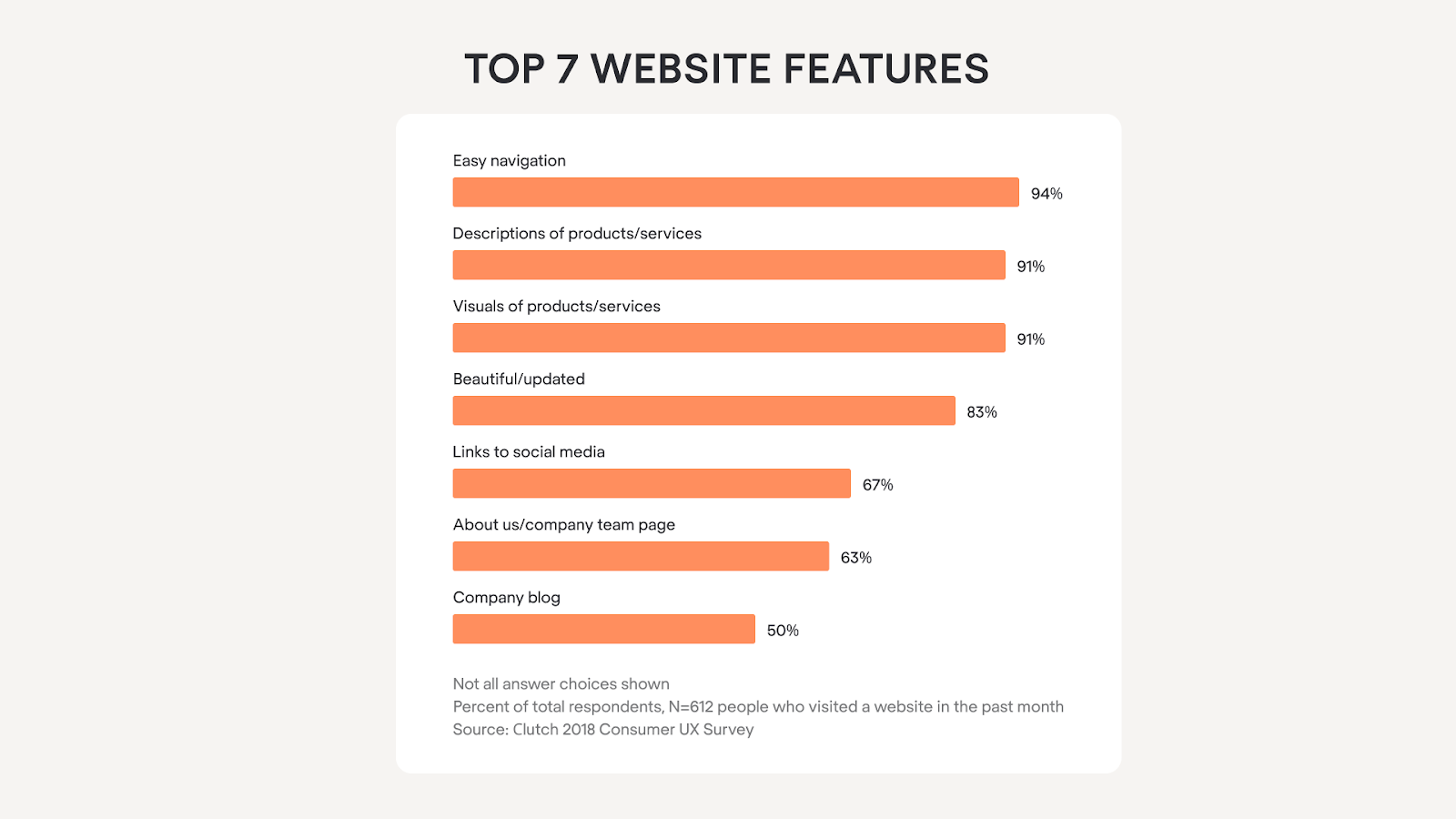
An Illustration about the Top 7 Website Features Source: Clutch 2018 Consumer UX Survey.
Tools for Enhancing User Experience
Numerous tools and platforms can assist businesses in optimizing user experience. Here are some essential tools for UX improvement:
Google Analytics
Google Analytics provides detailed insights into user behavior, page views, and conversion data. It’s a powerful tool for understanding how users interact with a website and identifying areas for improvement.
Hotjar
Hotjar offers heatmaps, session recordings, and surveys to visualize user behavior. It helps businesses understand how users navigate their websites and gather qualitative insights for UX enhancement.
Optimal Workshop
Optimal Workshop is a platform for information architecture and usability testing. It provides tools for card sorting, tree testing, and first-click testing to optimize website navigation.
UsabilityHub
UsabilityHub offers tools for usability testing, including preference testing, five-second tests, and click tests. These tools provide valuable insights into user preferences and behaviors.
Crazy Egg
Crazy Egg provides heatmaps, scrollmaps, and user recordings to analyze how users interact with a website. The visual data helps identify areas of improvement for a better user experience.
UserTesting
UserTesting allows businesses to conduct remote user testing with real people. It provides video recordings of users interacting with a website, offering valuable insights into the user experience.
Case Studies: Successful Implementation of UX Strategies
Airbnb
Airbnb has excelled in providing a seamless and intuitive user experience. The platform’s user-friendly interface, personalized recommendations, and transparent booking process contribute to high user satisfaction and repeat business.
Apple
Apple is renowned for its commitment to design and user experience. From the simplicity of its product interfaces to the coherence of its ecosystem, Apple prioritizes a seamless and enjoyable user experience, which contributes to customer loyalty.
Netflix
Netflix employs a data-driven approach to enhance user experience. The platform’s recommendation algorithm, personalized content suggestions, and user-friendly interface contribute to long user engagement and subscriber retention.
Conclusion
In the dynamic landscape of digital marketing, User Experience (UX) has emerged as a linchpin for success. Prioritizing UX in digital marketing is not just about creating visually appealing interfaces; it’s about understanding user needs, delivering seamless interactions, and fostering lasting connections.
Businesses that invest in optimizing UX stand to benefit from increased conversion rates, customer loyalty, and a positive online reputation. As digital interactions continue to shape consumer behavior, mastering the art of User Experience is not just a strategy—it’s a necessity for businesses aspiring to thrive in the digital era. Please visit our blog page for more insightful blogs and articles about the digital marketing landscape.
By adopting a user-centric mindset, leveraging data-driven insights, and continuously refining digital interfaces, businesses can create a competitive advantage and elevate their success in the ever-evolving digital landscape.
In the dynamic realm of digital marketing strategies, staying ahead of the curve is not just an advantage but a necessity. As the digital landscape evolves, so do the tools and strategies employed by marketers. One such game-changer is data analytics, a powerhouse that empowers digital marketers with insights, precision, and the ability to make informed decisions. Please read the following LinkedIn article The Role of Data Analytics in Digital Marketing.
The Rise of Data Analytics in Digital Marketing
In recent years, data analytics has emerged as a cornerstone of effective digital marketing. This section will provide an overview of the role data analytics plays in shaping marketing strategies. From customer behavior analysis to market trends and competitor insights, digital marketers are leveraging the power of data to drive their campaigns and make data-driven decisions.
Understanding Key Data Metrics
To harness the potential of data analytics in digital marketing, digital marketers need to be familiar with key metrics that provide valuable insights. This section will delve into crucial metrics such as website traffic, conversion rates, bounce rates, and customer acquisition costs. Understanding these metrics enables marketers to evaluate the performance of their campaigns and optimize strategies for better results.
Personalization Through Data Insights
One of the significant advantages of data analytics is its ability to facilitate personalized marketing strategies. By analyzing customer data, digital marketers can tailor their campaigns to individual preferences, creating a more engaging and relevant experience for the audience. This section will explore how data-driven personalization can enhance customer engagement and loyalty.
Predictive Analytics for Future-proof Strategies
Predictive analytics takes data analytics to the next level by forecasting future trends and outcomes based on historical data. In this section, we’ll explore how digital marketers are using predictive analytics to anticipate customer behavior, identify emerging market trends, and proactively adjust their strategies to stay ahead of the competition.
Social Media Analytics: Unveiling Audience Insights
Social media platforms have become indispensable for digital marketing, and their analytics tools provide a treasure trove of information. This section will delve into the world of social media analytics, discussing how marketers can leverage platforms like Facebook, Instagram, and Twitter to gain insights into audience demographics, engagement patterns, and the effectiveness of their social media campaigns.
Challenges and Ethical Considerations in Data Analytics
While data analytics offers immense benefits, it also comes with challenges and ethical considerations. From data privacy concerns to the potential misuse of consumer information, this section will address the darker side of data analytics and discuss how digital marketers can navigate these challenges responsibly.
As digital marketing continues to evolve, data analytics remains a driving force behind successful campaigns. By harnessing the power of data, digital marketers can refine their strategies, enhance customer experiences, and stay at the forefront of an ever-changing landscape. As we conclude our exploration of data analytics for digital marketers, it’s clear that those who embrace this powerful tool will not only survive but thrive in the competitive world of digital marketing.
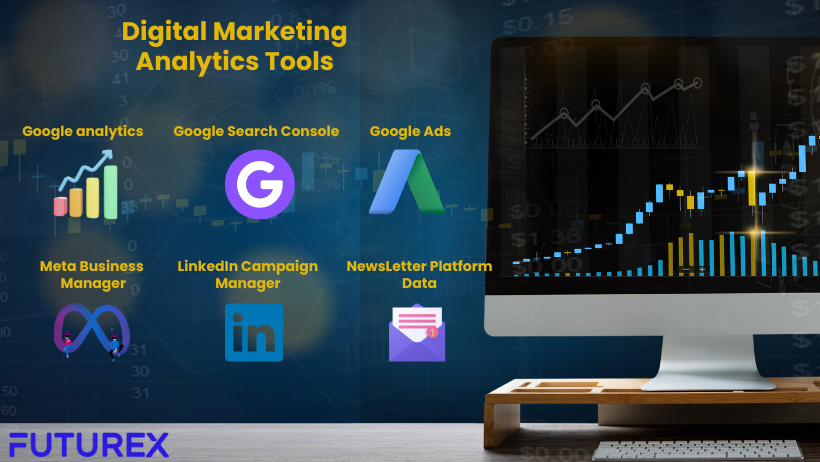
The image below shows the different types of Digital Marketing Analytics Tools
An Illustration of Digital Marketing Analytics Tools, Source: FutureX.
Data Analytics for Business Success
From gaining insights into consumer behavior to optimizing operational processes, data analytics has become a cornerstone for strategic decision-making.
Defining Data Analytics Objectives
The journey into data analytics begins with a clear understanding of business objectives. This section will explore the importance of aligning data analytics initiatives with overarching business goals. Whether the aim is to enhance customer satisfaction, streamline operations, or drive revenue growth, defining specific and measurable objectives is crucial for a successful data analytics strategy.
Establishing a Robust Data Infrastructure
A solid data infrastructure is the backbone of any successful data analytics strategy. This section will delve into the components of a robust infrastructure, including data storage, data processing tools, and data integration systems. Emphasizing the importance of data quality and cleanliness, we will explore how businesses can ensure that their data is accurate, consistent, and readily accessible for analysis.
Choosing the Right Data Analytics Tools
Selecting the appropriate data analytics tools is a critical decision that can significantly impact the success of a data strategy. This section will provide an overview of popular tools for data collection, processing, and visualization. Whether it’s SQL-based databases, machine learning algorithms, or business intelligence platforms, understanding the strengths and applications of various tools is essential for crafting an effective analytics strategy.
Embracing Predictive Analytics for Future Insights
Predictive analytics goes beyond understanding historical data; it anticipates future trends and outcomes. This section will explore the integration of predictive analytics into business strategies, demonstrating how businesses can leverage machine learning algorithms to forecast customer behavior, optimize inventory management, and make proactive decisions that give them a competitive edge.
Implementing Real-time Data Analytics
In a fast-paced business environment, the ability to analyze data in real-time is a game-changer. This section will discuss the benefits of real-time analytics and how businesses can implement systems that allow for instantaneous data processing. From monitoring social media sentiment to adjusting pricing strategies on-the-fly, real-time analytics empowers businesses to respond swiftly to changing market conditions.
Enhancing Decision-Making with Data Visualization
Data, when presented effectively, can tell a compelling story. This section will explore the role of data visualization in making complex information easily understandable. From interactive dashboards to visual reports, businesses can empower decision-makers at all levels to derive meaningful insights from data, fostering a data-driven decision-making culture.
Ensuring Data Security and Compliance
As businesses amass large volumes of sensitive data, ensuring security and compliance becomes paramount. This section will address strategies for safeguarding data against breaches and ensuring compliance with data protection regulations. From encryption techniques to access controls, businesses must prioritize data security to build trust with customers and partners.
Advantages of Data Analytics for Digital Marketers
As businesses strive to connect with their target audiences in more meaningful ways, digital marketers are turning to data analytics to gain valuable insights and drive impactful campaigns. Please refer to this article The Importance of Data Analytics in Digital Marketing.
Informed Decision-Making:
Data analytics empowers digital marketers with the ability to make informed and strategic decisions. By analyzing data on customer behavior, preferences, and engagement patterns, marketers can gain valuable insights that inform content creation, campaign strategies, and overall marketing efforts.
This data-driven decision-making process ensures that marketing initiatives are aligned with the needs and interests of the target audience.
Audience Segmentation and Targeting:
One of the key advantages of data analytics in digital marketing is the ability to segment audiences effectively. By analyzing demographic data, online behavior, and other relevant factors, marketers can create highly targeted and personalized campaigns.
This ensures that the right message reaches the right audience, maximizing the impact of marketing efforts and improving the overall return on investment (ROI).
Optimizing Campaign Performance:
Data analytics allows digital marketers to track the performance of their campaigns in real-time. Through metrics such as click-through rates, conversion rates, and engagement metrics, marketers can identify what is working well and what needs improvement.
This constant feedback loop enables marketers to optimize campaigns on the fly, allocating resources to strategies that deliver the best results.
Understanding Customer Journey:
The customer journey in the digital space is often complex, involving multiple touchpoints before a conversion takes place. Data analytics provides digital marketers with the tools to map and understand this journey comprehensively.
By analyzing customer interactions across various channels, marketers can identify the most influential touchpoints and tailor their strategies to enhance the overall customer experience.
Enhancing Personalization:
Consumers today expect personalized experiences, and data analytics plays a crucial role in meeting these expectations. By analyzing data on individual customer preferences, purchase history, and behavior, digital marketers can deliver highly personalized content and recommendations.
This level of personalization not only improves customer satisfaction but also increases the likelihood of conversion.
Measuring and Demonstrating ROI:
Quantifying the return on investment (ROI) is a perpetual challenge for marketers. Data analytics provides a solution by offering metrics and KPIs that enable marketers to measure the success of their campaigns objectively.
This not only helps in understanding the impact of marketing efforts but also provides the necessary insights to allocate resources effectively in future campaigns.
Competitor Analysis:
Understanding the competitive landscape is crucial for digital marketers. Data analytics allows marketers to conduct thorough competitor analysis by tracking competitor performance, identifying strengths and weaknesses, and uncovering market trends.
This information is invaluable for developing strategies that differentiate a brand and capitalize on market opportunities.
Adapting to Changing Trends:
Digital marketing operates in a fast-paced environment where trends and consumer behaviors can change rapidly. Data analytics provides digital marketers with the agility to adapt to these changes quickly.
By monitoring real-time data, marketers can identify emerging trends, capitalize on opportunities, and adjust strategies to stay ahead of the curve.
Conclusion:
In the data-driven landscape of today, businesses that master the art of data analytics gain a significant competitive advantage. By aligning analytics initiatives with business objectives, establishing robust data infrastructure, embracing predictive and real-time analytics, and prioritizing data security, businesses can unlock the full potential of their data to inform strategic decision-making and drive success. Please visit our blog page for more insightful blogs and articles about the digital marketing landscape.
As we conclude our exploration of data analytics strategies, it’s evident that the future belongs to those who harness the power of data strategically and ethically.
In the vast landscape of the internet, where millions of websites compete for attention, mastering traffic generation in marketing is crucial for anyone seeking success online. Whether you’re a blogger, a start-up, a business owner, or content creator, understanding how to drive traffic to your website is the key to building a robust online presence. Here’s a link to The Importance of a Traffic Generation for Startups.
Understanding the Importance of Website Traffic Generation.
Before we dive into the strategies, let’s establish why website traffic is so vital. Website traffic is essentially the lifeblood of any online venture. It represents the number of users visiting your website, and the more traffic you can attract, the greater your opportunities for success. Here are some key reasons why mastering traffic generation is essential:
According to a research carried out by HubSpot, Web traffic analytics report ,it shows where websites rank on SERPs as shown below.
An Illustration about where websites rank on SERPs, Source: HubSpot.
I. Enhanced Visibility and Brand Exposure:
One of the primary reasons why website traffic generation is paramount is the direct correlation between visibility and success. Increased traffic means more eyes on your content, products, or services.
This heightened exposure is critical for brand recognition and establishing a digital presence. In a world where online competition is fierce, being visible to your target audience is the first step toward capturing their attention and, ultimately, their business.
II. Boosting Search Engine Rankings:
Search engines, like Google, play a pivotal role in directing users to relevant websites. Websites with higher traffic often rank higher in search engine results pages (SERPs). The algorithms of search engines are designed to recognize popular and frequently visited websites as more credible and relevant.
By consistently generating traffic, you signal to search engines that your website is valuable, leading to improved rankings and, consequently, more organic traffic.
III. Building Credibility and Trust:
For any business or individual seeking success in the digital realm, credibility is non-negotiable. A website that consistently attracts traffic is perceived as more trustworthy and credible by visitors.
Users are more likely to engage with, trust, and make transactions with websites that have a proven track record of attracting a substantial audience. Website traffic, therefore, becomes a key metric in establishing and maintaining trust in the online arena.
IV. Understanding Audience Behavior:
Analyzing website traffic provides valuable insights into user behavior. Through tools like Google Analytics, you can track user interactions, popular content, and the paths visitors take through your site.
This data is a goldmine for understanding your audience’s preferences, allowing you to tailor your content, products, or services to better meet their needs. Informed decision-making based on user behavior is a cornerstone of successful digital strategies.
V. Monetization Opportunities:
For businesses looking to generate revenue online, website traffic is the lifeblood of monetization. Whether through advertising, affiliate marketing, or direct sales, a larger and more engaged audience opens up diverse avenues for generating income.
Many online businesses depend on website traffic to drive sales and conversions, making it an indispensable element of their revenue streams.
VI. Adaptability to Algorithm Changes:
Digital platforms, especially social media and search engines, frequently update their algorithms. Websites heavily dependent on a single source of traffic may face challenges when algorithms change.
Diversifying traffic sources, including organic search, social media, and direct visits, enhances a website’s resilience to algorithmic shifts. By strategically generating traffic from various channels, you reduce the vulnerability to sudden changes in the digital landscape. Please read the following article Understanding Website Traffic Statistics.
Effective Strategies for Traffic Generation
1. Search Engine Optimization (SEO):
Keyword Research: Identify and target specific keywords related to your content or business. Tools like Google Keyword Planner or SEMrush can help you find relevant keywords with high search volumes.
On-Page SEO: Optimize various on-page elements, including meta titles, meta descriptions, headers, and content, to make your pages more search engine-friendly.
Quality Content: Creating valuable, high-quality content not only attracts users but also helps improve your search engine rankings. Google values content that addresses users’ needs and provides relevant information.
Backlink Building: Acquire backlinks from reputable websites in your industry. Quality backlinks signal to search engines that your content is trustworthy and authoritative.
2. Content Marketing:
Blogging: Regularly publishing blog posts establishes your website as a valuable resource in your niche. Moreover, it also provides fresh content for search engines to index.
Guest Posting: Writing articles for other reputable websites in your industry can help you tap into their audience and build backlinks.
Content Upgrades: Offering downloadable resources, such as ebooks or guides, encourages users to provide their email addresses, helping you build a subscriber list.
Podcasting and Videos: Diversify your content by incorporating podcasts and videos. This caters to different preferences and can be shared across various platforms.
3. Social Media Engagement:
Consistent Posting: Regularly share content on social media platforms to keep your audience engaged and informed about your latest offerings.
Visual Content: Visuals like images and videos are more shareable and engaging on social media. Use them to convey your message effectively.
Hashtags: Incorporate relevant hashtags to increase the discoverability of your posts and reach a wider audience.
Interactive Content: Run polls, quizzes, and contests to encourage participation and increase your content’s reach.
4. Email Marketing:
Segmentation: Divide your email list based on user characteristics or behaviors. This allows you to send targeted and personalized content to specific groups.
Personalization: Tailor your email content to each subscriber, addressing their preferences and behaviors. Personalized emails have higher engagement rates.
Automation: Implement automated email sequences for onboarding, nurturing leads, or sending follow-up messages. Automation helps you maintain consistent communication.
5. Influencer Partnerships:
Identify Influencers: Find influencers in your industry whose audience aligns with your target demographic.
Sponsored Content: Collaborate with influencers for sponsored posts or product placements. Their endorsement can introduce your brand to a larger audience.
Affiliate Marketing: Create an affiliate program where influencers earn a commission for driving traffic or sales to your website.
6. Online Advertising:
Google Ads: Invest in paid search advertising to appear at the top of search engine results for specific keywords.
Social Media Ads: Utilize paid advertising on platforms like Facebook, Instagram, or LinkedIn to target specific demographics and increase visibility.
Retargeting: Display ads to users who have visited your site but did not complete a desired action, encouraging them to return.
7. Networking and Community Building:
Partnerships: Collaborate with other businesses or websites through partnerships, co-hosted events, or joint campaigns.
Forums and Communities: Actively participate in online forums or communities related to your niche, establishing yourself as an industry expert.
Webinars and Live Sessions: Host or participate in webinars and live sessions to engage with your audience in real-time and answer their questions.
8. Mobile Optimization:
Responsive Design: Ensure your website is accessible and visually appealing on various devices, especially mobile phones.
App Optimization: If you have a mobile app, optimize it for app store visibility and positive user experiences.
9. User Experience (UX):
Page Speed Optimization: Improve loading times to enhance user experience and reduce bounce rates.
Clear Call-to-Actions (CTAs): Guide users on what actions to take next, whether it’s making a purchase, signing up for a newsletter, or exploring more content.
A/B Testing: Experiment with different layouts, designs, and CTAs to find what resonates best with your audience and maximizes conversions.
10. Analytics and Iteration:
Use Analytics Tools: Leverage tools like Google Analytics to track user behavior, understand where your traffic is coming from, and identify areas for improvement.
Iterative Approach: Regularly analyze data to make informed decisions and adjust your strategies based on performance.
Conversion Rate Optimization (CRO): Optimize your website and content to improve conversion rates, turning visitors into customers or subscribers.
14. Chatbots and Live Chat:
AI-Enhanced Customer Interaction: AI-powered chatbots provide personalized assistance, enhancing user satisfaction and engagement.
Incorporating AI into your traffic generation strategies can significantly boost efficiency and effectiveness, allowing for a more personalized and data-driven approach to reaching and engaging your target audience. Please read this article about Unlocking the Power of AI for Traffic Generation.
Implementing these strategies requires a tailored approach based on your specific goals, target audience, and industry. Regularly monitor performance metrics and be prepared to adapt your strategies to changing trends and audience behaviors.
Advantages of Traffic Generation:
Increased Visibility and Brand Awareness:
Successful traffic generation strategies amplify your online visibility, exposing your brand to a wider audience. This increased exposure can contribute to enhanced brand awareness, making your business more recognizable in the digital sphere.
Boost in Conversions:
More traffic often translates to more potential customers. With a well-optimized website and compelling content, increased traffic can lead to higher conversion rates, positively impacting your bottom line.
Improved Search Engine Rankings:
Search engines often favor websites with higher traffic, considering it as a sign of relevance and authority. As your website climbs the search engine rankings, it becomes more accessible to users actively seeking information related to your niche.
Data Insights and Analytics:
Traffic generation strategies, particularly digital marketing efforts, provide valuable data and analytics. Understanding user behavior, preferences, and demographics can empower you to refine your marketing strategies and optimize your website for better performance.
Monetization Opportunities:
Higher traffic opens up opportunities for monetization, whether through advertising, sponsored content, affiliate marketing, or selling products and services. Successfully executed, these revenue streams can turn your website into a profitable venture.
Conclusion
Mastering traffic generation is an ongoing process that requires a combination of strategies and adaptability. By incorporating a mix of SEO, social media marketing, email campaigns, and other proven techniques, you can steadily increase your online visibility and build a sustainable audience.
Remember, the key is not just to attract traffic but to engage and retain your audience. Providing value through high-quality content and fostering genuine connections will contribute to the long-term success of your online venture.
Stay informed about industry trends, be open to trying new approaches, and consistently refine your strategies to stay ahead in the dynamic world of online traffic generation. Please visit our blog page for more insightful blogs and articles about the digital marketing landscape.
Google Ads is an essential tool for businesses looking to reach their target audience and increase their online visibility. However, staying up to date with Google’s ever-evolving algorithm can be a challenging task for many advertisers. In this blog post, we will discuss the importance of keeping up with Google Ads algorithm updates and provide valuable tips for maintaining success in your advertising campaigns.
Adapting to Algorithm Changes
Google frequently updates its ad ranking algorithm to ensure that users are provided with the most relevant and useful ads. As an advertiser, it is crucial to stay informed about these changes and adapt your strategies accordingly. Here are some key points to consider when adapting to algorithm changes:
1. Stay Informed
It is essential to stay up to date with Google’s algorithm updates by regularly checking Google’s official announcements and industry forums. This knowledge will help you understand how changes in the algorithm may impact your ad campaigns and give you insights into potential improvements you can make.
2. Analyze Performance Metrics
Regularly analyze your campaign performance metrics to identify any significant changes or trends. Monitor important metrics such as click-through rates (CTR), conversion rates, and Quality Score. Sudden drops or increases in these metrics may indicate the impact of algorithm updates. Use this data to make informed decisions about your ad campaigns.
3. Test, Test, Test
Constantly testing different ad copy, landing pages, keywords, and bidding strategies is crucial to stay ahead of algorithm changes. By testing various elements of your campaigns, you can identify what works best for your target audience and optimize for better performance. This proactive approach will help you adapt to any algorithm updates and maintain a competitive edge.
4. Focus on User Experience
Google’s algorithm updates often prioritize user experience. Ensure that your landing pages provide relevant and engaging content, are mobile-friendly, and have fast loading times. Consider user intent when designing your ad campaigns and landing pages. By focusing on user experience, you will not only align with Google’s algorithm but also provide value to your potential customers.
Tips for Google Ads Success
While keeping up with algorithm updates is crucial, there are also several foundational strategies that can help you achieve success with Google Ads. Here are some valuable tips:
1. Set Clear Goals
Before launching your ad campaigns, establish clear and measurable goals. Whether you aim to increase website traffic, generate leads, or boost sales, defining your objectives will guide your campaign structure and performance tracking.
2. Understand Your Target Audience
Knowing your target audience is fundamental for crafting effective ad campaigns. Conduct market research to identify your ideal customers, their demographics, interests, and preferences. This insight will enable you to tailor your ad content and targeting strategies to reach the right audience at the right time.
3. Implement Conversion Tracking
Conversion tracking allows you to measure the success of your campaigns by tracking specific actions that users take on your website. By implementing conversion tracking, you can evaluate the effectiveness of your ads, optimize your bidding strategies, and make data-driven decisions to improve campaign performance.
4. Optimize Ad Copy and Keywords
Create compelling ad copy that resonates with your target audience. Use relevant keywords that align with your business offerings to increase ad visibility. Continually optimize your ad copy and keywords based on performance data and user feedback to improve ad relevance and attract more clicks.
5. Regularly Monitor and Adjust
Monitor your campaign performance regularly and make necessary adjustments. Continuously analyze your ad performance metrics, including impressions, clicks, and conversions, and make data-driven optimizations to maximize your ROI. Stay vigilant and adapt your strategies based on the changing advertising landscape.
Google Ads Algorithm Updates
Google frequently updates its ad ranking algorithm to ensure that users are provided with the most relevant and high-quality ads. While the specifics of each update are typically not disclosed, Google often announces significant algorithm changes and provides guidance for advertisers. Here are a few notable updates that have had a significant impact on Google Ads:
1. Quality Score Update
Google’s Quality Score is a crucial metric that measures the relevance and quality of your keywords, ads, and landing pages. In recent years, Google has made updates to its Quality Score algorithm to provide a more accurate assessment of the user experience. Advertisers need to focus on improving their Quality Scores to achieve better ad rankings and lower cost-per-click.
2. Mobile-Friendly Algorithm
With the increasing use of mobile devices, Google introduced a mobile-friendly algorithm update that prioritizes websites optimized for mobile browsing. Advertisers must ensure their landing pages are mobile-friendly, fast-loading, and offer a seamless user experience on mobile devices to maintain ad visibility and conversions.
3. Machine Learning Updates
Google’s machine learning algorithms play a vital role in ad targeting and optimization. Google has been continuously refining its machine learning capabilities to deliver more precise ad targeting and improve overall ad performance. Advertisers should embrace machine learning and leverage Google’s automated bidding strategies for better campaign outcomes.
4. Core Updates
Google periodically rolls out core updates that can have a substantial impact on organic search results and, consequently, paid search ads. Advertisers need to stay informed about these updates and analyze their effects on ad rankings and performance.
In conclusion, staying informed about Google Ads algorithm updates is crucial for advertisers looking to maintain success in their campaigns. By adapting to algorithm changes, implementing best practices, and continuously optimizing your campaigns, you can stay ahead of the competition and maximize your return on investment in Google Ads.
A PPC (Pay-Per-Click) campaign is a powerful tool for businesses looking to increase their online visibility and drive targeted traffic to their websites. It allows advertisers to display their ads on search engines and other platforms, and they only pay when a user clicks on their ad. One key aspect of a successful PPC campaign is retargeting. This involves showing ads to users who have already interacted with your website or expressed interest in your products or services. In this blog post, we will explore the impact of retargeting in PPC campaigns and discuss the benefits and strategies associated with this technique.
PPC Campaign Strategies
Before delving into the impact of retargeting, let’s first understand some key PPC campaign strategies that can help drive better results. These strategies are essential for creating a solid foundation for your campaign:
Keyword Research: Identifying and targeting the right keywords is crucial for the success of your PPC campaign. Thorough keyword research can help you identify the terms and phrases that your potential customers are searching for.
Ad Copy Optimization: Creating compelling and relevant ad copy is essential to capture the attention of your target audience. Your ad copy should highlight the unique selling points of your products or services and entice users to click on your ad.
Landing Page Optimization: Once users click on your ad, it’s important to provide them with a seamless and user-friendly experience on your landing page. Optimizing your landing page can improve conversion rates and maximize the ROI of your PPC campaign.
Ad Testing: Regularly testing different ad variations can help you identify which ads are performing the best. A/B testing can provide valuable insights into the messaging and design elements that resonate with your target audience.
Conversion Tracking: Setting up conversion tracking allows you to measure the effectiveness of your PPC campaign. By tracking conversions, you can determine which keywords, ads, and landing pages are driving the most valuable actions on your website.
Impact of Retargeting
Retargeting is a technique that involves showing ads to users who have previously visited your website or shown some level of interest in your products or services. It allows you to stay top of mind with potential customers and encourage them to take further action. Here are some key ways in which retargeting can impact your PPC campaigns:
Increased Brand Awareness: By repeatedly displaying your ads to users who are already familiar with your brand, it helps reinforce your brand image and increases brand recall. This can lead to higher brand awareness and improve the chances of users converting into customers.
Higher Conversion Rates: Retargeting allows you to target users who have already shown interest in your products or services. These users are more likely to convert as they are already familiar with your brand and have expressed some level of intent. By focusing on these warm leads, you can achieve higher conversion rates and maximize the ROI of your PPC campaign.
Improved Ad Relevance: Retargeting enables you to deliver highly targeted and relevant ads to users based on their previous interactions. By customizing your ad messaging and offers to align with their specific interests, you can grab their attention and increase the chances of conversion.
Enhanced Customer Lifetime Value: Retargeting allows you to re-engage with previous customers and encourage repeat purchases. By staying connected with your existing customer base, you can foster long-term relationships, increase customer loyalty, and ultimately boost customer lifetime value.
Reduced Abandoned Carts: One common challenge for e-commerce businesses is shopping cart abandonment. Retargeting can help address this issue by reminding users about the items they left in their cart and enticing them to complete the purchase. This can significantly reduce cart abandonment rates and drive more sales.
Retargeting Benefits and Strategies
Now that we understand the impact of retargeting in PPC campaigns, let’s explore some specific benefits and strategies associated with this technique:
Segmentation: One of the key advantages of retargeting is the ability to segment your audience based on their behaviour on your website. You can create different audience segments and tailor your retargeting ads accordingly. For example, you can target users who visited specific product pages or those who added items to their cart but didn’t complete the purchase.
Dynamic Retargeting: Dynamic retargeting takes personalization to the next level by automatically showing users the specific products or services they viewed on your website. Moreover, this highly tailored approach can increase engagement and conversion rates.
Frequency Capping: To avoid overwhelming users with too many ads, it’s important to implement frequency capping. This ensures that you limit the number of times your ads are shown to each user within a specific time period. This prevents ad fatigue and annoyance.
Ad Creatives: When it comes to retargeting ads, creativity plays a crucial role. It’s important to create visually appealing and compelling ad creatives that catch the users’ attention. Experiment with different ad formats, such as static images, animated GIFs, or even video ads, to see what resonates best with your audience.
Optimized Bidding: Retargeting allows you to focus on users who are more likely to convert. This means you can optimize your bidding strategy accordingly. By assigning higher bids to these valuable segments, you can increase your chances of winning ad auctions and reaching your target audience.
Conclusion
In conclusion, retargeting is a highly effective strategy. It can significantly impact the success of your PPC campaigns. By targeting users who have already shown interest in your brand, retargeting allows you to stay top of mind. Furthermore, it increases conversion rates, and maximizes the ROI of your campaigns. Implementing retargeting strategies, such as segmentation, dynamic retargeting, and optimized bidding, can further enhance the effectiveness of your retargeting efforts. So, if you haven’t already incorporated retargeting into your PPC campaigns, it’s time to leverage this powerful technique. For this and more you can talk to us and lets chat the way forward.