Video content has become a dominant force in marketing, with the number of businesses incorporating video into their marketing strategies growing every year. In 2022, video content is set to evolve further, with the rise of short-form video content, live streaming, and the impact video has on social media platforms. In this blog post, we will explore the evolution of video marketing and what businesses can do to stay ahead of the curve.
The Evolution of Video Marketing
Video marketing has come a long way since the early days of television commercials. Today, businesses can create and distribute video content across a variety of platforms, from social media channels to streaming services. And with the rise of smartphones and mobile devices, video content has become more accessible to consumers than ever before.
Over the past few years, video content has evolved to become shorter, more interactive, and easier to consume. Consumers now expect video content that is engaging and captures their attention quickly, which has given rise to the popularity of short-form videos. Additionally, the rise of live streaming has allowed businesses to engage with their audiences in real-time, creating a more personalized and authentic experience.
The Rise of Short-Form Video Content
Short-form video content has become increasingly popular in recent years, with platforms like Instagram, TikTok, and Reels leading the way. These platforms allow businesses to create engaging content that is less than a minute long, making it easier for consumers to consume and share.
The rise of short-form video content has also given way to more creative approaches to video marketing. Businesses can now create short, attention-grabbing videos that communicate their brand message quickly and effectively. For example, a fashion brand could create short-form videos showcasing their latest collection, giving potential customers a quick and engaging glimpse at what they have to offer.
The Impact of Video on Social Media Platforms
Social media platforms have embraced video content, making it a central feature of their platforms. Facebook, Instagram, Twitter, and LinkedIn all offer video content options, including live streaming, short-form videos, and long-form videos. Video content has quickly become a staple on these platforms, with consumers expecting to see more video content from businesses each year.
By incorporating video content into their social media strategies, businesses can reach wider audiences and engage with them more effectively. Additionally, the ability to share videos on social media has made it easier for businesses to generate user-generated content, with consumers sharing videos from their favorite brands with their social networks.
The Rise of Live Streaming
Live streaming has become increasingly popular in recent years, with platforms like Facebook, Instagram, and YouTube offering live streaming options. The popularity of live streaming has given businesses an opportunity to engage with their audiences in real-time, creating an authentic and personalized experience.
Live streaming can take many forms, from Q&A sessions to product launches, to live events. By engaging with their audiences in real-time, businesses can build stronger relationships with their customers and increase brand loyalty.
Conclusion
Video marketing has come a long way in the last few decades, with businesses incorporating video into their marketing strategies in ever-increasing numbers. As we move into 2023, businesses that want to stay ahead of the curve will need to embrace the rise of short-form video content, live streaming, and the growing impact of video on social media platforms.
By creating engaging short-form videos, leveraging the power of live streaming, and incorporating video into their social media strategies, businesses can reach wider audiences, connect with their customers more effectively, and stay ahead of the competition. The evolution of video marketing shows no signs of slowing down, and businesses that embrace the power of video will reap the rewards in the years to come.
In the fast-paced world of digital marketing, businesses are constantly striving to maximize the effectiveness of their online presence. One key metric that holds the power to transform visitors into customers is Conversion Rate Optimization (CRO). Please read the following HubSpot blog about Conversion Rate Optimization.
Understanding Conversion Rate Optimization (CRO)
Definition
Conversion Rate Optimization, commonly known as CRO, refers to the systematic process of enhancing a website or digital platform to increase the percentage of visitors who convert into customers. The ultimate goal is to optimize the user experience, boost engagement, and drive desired actions, such as making a purchase, filling out a form, or subscribing to a newsletter.
Key Metrics
Before delving into CRO strategies, it’s crucial to understand the key metrics associated with conversion:
Conversion Rate (CR): The percentage of website visitors who complete a desired goal, such as making a purchase.
Bounce Rate: The percentage of visitors who navigate away from the site after viewing only one page.
Average Session Duration: The average time visitors spend on the website.
Click-Through Rate (CTR): The percentage of users who click on a specific link compared to the total number of users who view a page.
Exit Rate: The percentage of visitors who leave a specific page.
Importance of Conversion Rate Optimization
Maximizing Marketing ROI
Effective CRO can significantly impact the return on investment (ROI) of marketing efforts. By converting a higher percentage of visitors into customers, businesses can derive more value from their advertising and marketing expenditures.
Enhancing User Experience
CRO is synonymous with improving the overall user experience. By understanding user behavior, preferences, and pain points, businesses can tailor their online presence to meet customer needs, resulting in increased satisfaction and loyalty.
Data-Driven Decision-Making
CRO relies heavily on data analysis to identify areas for improvement. By leveraging analytics tools and user feedback, businesses can make informed decisions to optimize their websites continually.
Staying Competitive
In today’s competitive digital landscape, businesses that prioritize CRO gain a competitive edge. A seamless and efficient online experience can set a brand apart, attracting and retaining customers in a crowded marketplace.
An Illustration about theConversion Rate Optimization Statistics for 2023, Source: SmartInsights
The CRO Process
Achieving success with Conversion Rate Optimization requires a systematic approach. The following steps outline the key elements of the CRO process:
1. Define Goals and Key Performance Indicators (KPIs)
Before embarking on a CRO journey, it’s essential to define clear and measurable goals. Whether the objective is to increase online sales, generate leads, or boost sign-ups, establishing specific Key Performance Indicators (KPIs) provides a roadmap for success.
2. Understand Your Audience
Understanding the target audience is fundamental to CRO. Conducting user research, analyzing demographics, and identifying customer pain points enable businesses to tailor their messaging and user experience to resonate with their audience.
3. Conduct Website Audits
A thorough audit of the website is necessary to identify potential barriers to conversion. This includes analyzing website navigation, page load times, mobile responsiveness, and the overall user interface. Addressing issues discovered during the audit is crucial for creating a seamless user experience.
4. Implement A/B Testing
A/B testing, also known as split testing, involves comparing two versions of a webpage or app to determine which one performs better. Elements such as headlines, images, calls-to-action, and layout can be tested to identify the most effective combinations.
5. Optimize Landing Pages
Landing pages play a pivotal role in the conversion process. Optimizing these pages for relevance, clarity, and a compelling call-to-action can significantly impact conversion rates. Elements such as headline, copy, and form design should be carefully crafted to guide visitors towards the desired action.
6. Improve Website Speed
Page load times have a direct impact on user experience and conversion rates. Slow-loading pages can lead to increased bounce rates and decreased user satisfaction. Optimizing website speed through techniques such as image compression and efficient coding is essential for CRO success.
7. Enhance Mobile Experience
With a growing number of users accessing websites via mobile devices, optimizing for mobile is non-negotiable. Responsive design, mobile-friendly navigation, and streamlined checkout processes contribute to a positive mobile user experience.
8. Utilize Persuasive Copywriting
Compelling and persuasive copy is a powerful tool in CRO. Crafting messaging that resonates with the target audience, addresses pain points, and clearly communicates value propositions can influence visitor behavior and drive conversions.
9. Implement Exit-Intent Popups
Exit-intent popups are a strategic way to re-engage visitors who are about to leave the site. By offering discounts, incentives, or additional information, businesses can capture leads and potentially convert visitors who may have otherwise abandoned the site.
10. Gather and Analyze User Feedback
User feedback is invaluable for understanding the customer experience. Implementing surveys, user testing, and monitoring social media channels for comments and reviews provide insights that quantitative data alone may not reveal.
11. Continuous Monitoring and Iteration
CRO is an ongoing process that requires continuous monitoring and iteration. Regularly analyzing performance data, adapting to changes in user behavior, and staying informed about industry trends are essential for sustained success.
Tools for Conversion Rate Optimization
Numerous tools and platforms are available to assist businesses in their CRO efforts. Here are some essential tools that can streamline the optimization process:
Google Analytics
Google Analytics is a powerful analytics tool that provides in-depth insights into website traffic, user behavior, and conversion data. It’s a cornerstone for any CRO strategy, offering valuable information for data-driven decision-making.
Hotjar
Hotjar is a user behavior analytics tool that enables businesses to visualize how users interact with their websites. Features include heatmaps, session recordings, and surveys, providing a comprehensive understanding of user behavior.
Optimizely
Optimizely is a popular A/B testing platform that allows businesses to experiment with different variations of web pages and analyze their impact on conversion rates. It simplifies the testing process and provides actionable insights.
Crazy Egg
Crazy Egg offers heatmaps, scrollmaps, and user recordings to help businesses understand how users interact with their websites. The visual data provided by Crazy Egg aids in identifying areas for improvement.
Unbounce
Unbounce is a landing page builder designed to create high-converting landing pages quickly. With a user-friendly interface and A/B testing capabilities, Unbounce is an excellent tool for optimizing landing page performance.
SurveyMonkey
SurveyMonkey is a versatile survey tool that allows businesses to gather feedback directly from users. It’s valuable for understanding user preferences, identifying pain points, and uncovering opportunities for improvement.
VWO (Visual Website Optimizer)
VWO is a comprehensive CRO platform that offers A/B testing, split URL testing, and multivariate testing. It also provides features for personalization and conversion tracking.
While CRO can yield significant benefits, businesses often face challenges along the way. Recognizing these challenges is crucial for developing effective strategies to overcome them:
Insufficient Data
Lack of comprehensive data can hinder CRO efforts. Businesses must invest in analytics tools and gather sufficient data to make informed decisions about optimization strategies.
Ineffective A/B Testing
A/B testing is a powerful tool, but improper implementation or misinterpretation of results can lead to ineffective decisions. It’s essential to design tests carefully, consider sample sizes, and interpret results accurately.
Overlooking Mobile Experience
With the increasing use of mobile devices, overlooking the mobile user experience can be a costly mistake. Businesses must ensure that their websites are optimized for mobile users to prevent potential conversion barriers.
Lack of Clear Call-to-Action (CTA)
A confusing or unclear call-to-action can result in missed conversion opportunities. Businesses should ensure that their CTAs are prominently displayed, compelling, and guide users toward the desired action.
Ignoring User Feedback
User feedback is a valuable resource that businesses sometimes overlook. Ignoring user comments, reviews, and survey responses can lead to missed opportunities for improvement.
Inconsistent Brand Messaging
Inconsistency in brand messaging across different channels can create confusion for users. Businesses should maintain a cohesive brand identity to build trust and credibility with their audience.
Case Studies: Successful Conversion Rate Optimization Strategies
Amazon
Amazon, the e-commerce giant, is a prime example of effective CRO. The platform continuously optimizes its website to provide a seamless shopping experience. Elements such as personalized product recommendations, user-friendly navigation, and a frictionless checkout process contribute to high conversion rates.
HubSpot
HubSpot, a marketing and sales platform, has mastered CRO through a combination of effective landing pages and lead generation strategies. Their landing pages are designed with clear and persuasive copy, compelling visuals, and strategically placed calls-to-action, resulting in high conversion rates for lead acquisition.
Shopify
Shopify, a popular e-commerce platform, prioritizes CRO to help merchants succeed in online selling. The platform offers customizable templates, easy navigation, and built-in tools for A/B testing, empowering users to optimize their online stores for maximum conversions.
Conclusion
Conversion Rate Optimization is a dynamic and essential aspect of digital marketing that empowers businesses to maximize the value of their online presence. By understanding the importance of CRO, following a systematic optimization process, utilizing the right tools, and learning from successful case studies, businesses can enhance their conversion rates and drive sustainable growth. Please visit our blog page for more insightful blogs and articles about the digital marketing landscape.
Continuous monitoring, adaptation to user behavior, and a commitment to providing an exceptional user experience are key ingredients for CRO success in the ever-evolving digital landscape. As businesses continue to navigate the complexities of the online world, mastering CRO remains a powerful strategy for achieving and sustaining success.
In an era dominated by smartphones and on-the-go consumers, mobile marketing has become an indispensable tool for businesses aiming to stay ahead in the digital landscape. Mobile marketing has emerged as a powerhouse, transforming the way businesses connect with their audience. With the majority of the world’s population owning smartphones, leveraging mobile platforms has become essential for brands seeking to thrive in the digital era. Please read the following Adobe Experience Cloud blog: What is Mobile Marketing?.
Understanding the Mobile Landscape
Mobile-First Mindset
The foundation of successful mobile marketing begins with adopting a mobile-first mindset. Ensure that every aspect of your digital presence, from websites to emails, is designed with the mobile user in mind. Responsive design and streamlined user experiences are non-negotiable.
Mobile Analytics
Harness the power of mobile analytics tools to gain insights into user behavior. Platforms like Google Analytics for Mobile and Mixpanel provide invaluable data on user engagement, allowing you to make informed decisions and refine your mobile strategy.
Optimizing Your Website for Mobile Users
Responsive Design
Craft a seamless and visually appealing experience for mobile users with responsive design. Your website should adapt to various screen sizes and resolutions, ensuring a consistent and user-friendly interface across devices.
Fast Loading Speeds
Mobile users are notoriously impatient. Optimize your website’s loading speed to keep bounce rates low. Compress images, minimize HTTP requests, and leverage browser caching to create a swift and efficient mobile browsing experience.
Intuitive Navigation
Simplify navigation for mobile users. Implement user-friendly menus, intuitive search functionalities, and clear calls-to-action. Ensure that visitors can quickly find what they’re looking for without unnecessary clicks.
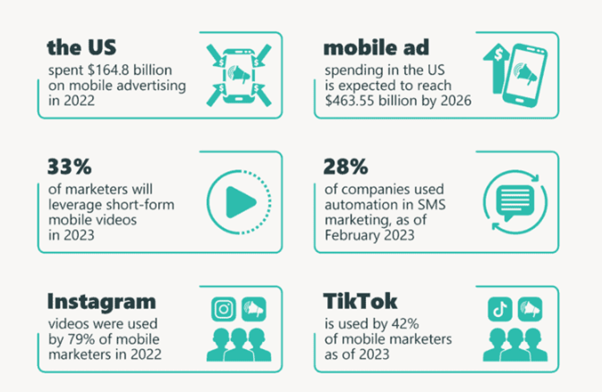
An Illustration about theTop 6 Mobile Marketing Statistic., Source: VPNAlert
Embracing the Power of Mobile Apps
Strategic App Development
Consider developing a mobile app if it aligns with your business model. A well-designed app can enhance customer loyalty, offer personalized experiences, and provide a direct channel for communication.
In-App Marketing
Once your app is live, explore in-app marketing strategies. From push notifications to personalized recommendations, leverage the unique capabilities of mobile apps to engage users directly within the application.
User Reviews and Feedback
Encourage and respond to user reviews. Positive reviews can boost app visibility, while constructive criticism provides valuable insights for improvements. Actively engaging with your app’s user community enhances brand credibility.
Harnessing the Potential of SMS Marketing
Permission-Based SMS Campaigns
Respect user privacy and seek explicit permission before sending SMS messages. Develop permission-based SMS campaigns that offer real value to recipients, such as exclusive deals, time-sensitive promotions, or important updates.
Personalization and Targeting
Segment your SMS campaigns based on user preferences and behaviors. Personalize messages to make recipients feel valued. Use targeted SMS promotions to re-engage dormant users and drive conversions.
Integrating Social Media for Mobile Audiences
Mobile-Optimized Social Content
Craft social media content with mobile users in mind. Use visually striking images, concise captions, and mobile-friendly video formats. Platforms like Instagram and TikTok thrive on mobile-centric content.
Social Commerce Strategies
Explore social commerce opportunities. Many users discover and purchase products directly through social media platforms. Leverage features like shoppable posts and in-app checkout to streamline the purchasing process.
Location-Based Marketing Tactics
Geo Targeted Campaigns
Leverage geotargeting to send relevant messages to users based on their location. Whether it’s offering promotions when users are near your store or providing location-specific information, geotargeting enhances the relevance of your campaigns.
Beacons and Proximity Marketing
Utilize beacon technology for proximity marketing. Beacons can send personalized messages or promotions to users when they are in close proximity to your physical location, enhancing the overall customer experience.
The Future: Emerging Technologies in Mobile Marketing
Augmented Reality (AR) Experiences
Explore the potential of augmented reality for mobile marketing. AR experiences can engage users in innovative ways, from virtual try-on features for products to location-based AR games that drive foot traffic.
Voice Search Optimization
As voice search becomes more prevalent, optimize your mobile content for voice queries. Consider how users might phrase voice commands and tailor your content to align with natural language patterns.
Analytics, Testing, and Continuous Improvement
Mobile-Specific Analytics
Utilize analytics tools specific to mobile platforms. Understand user flows, device-specific behaviors, and conversion paths unique to mobile users. This data is crucial for refining your mobile strategy.
A/B Testing for Mobile Campaigns
Implement A/B testing for your mobile campaigns. Test variations in subject lines, visuals, and calls-to-action to uncover what resonates best with your mobile audience. Apply these insights to optimize future campaigns.
User Feedback and Iterative Improvement
Solicit feedback directly from your mobile users. Whether through in-app surveys or social media, gather insights into user preferences and pain points. Use this feedback for iterative improvements in your mobile strategy.
Compliance and Ethical Considerations
Privacy Compliance
Prioritize user privacy and adhere to data protection regulations. Ensure that your mobile marketing practices comply with laws such as GDPR and prioritize transparency regarding data collection and usage.
Mastering mobile marketing requires a holistic approach that combines technical optimization, strategic planning, and a keen understanding of user behavior.
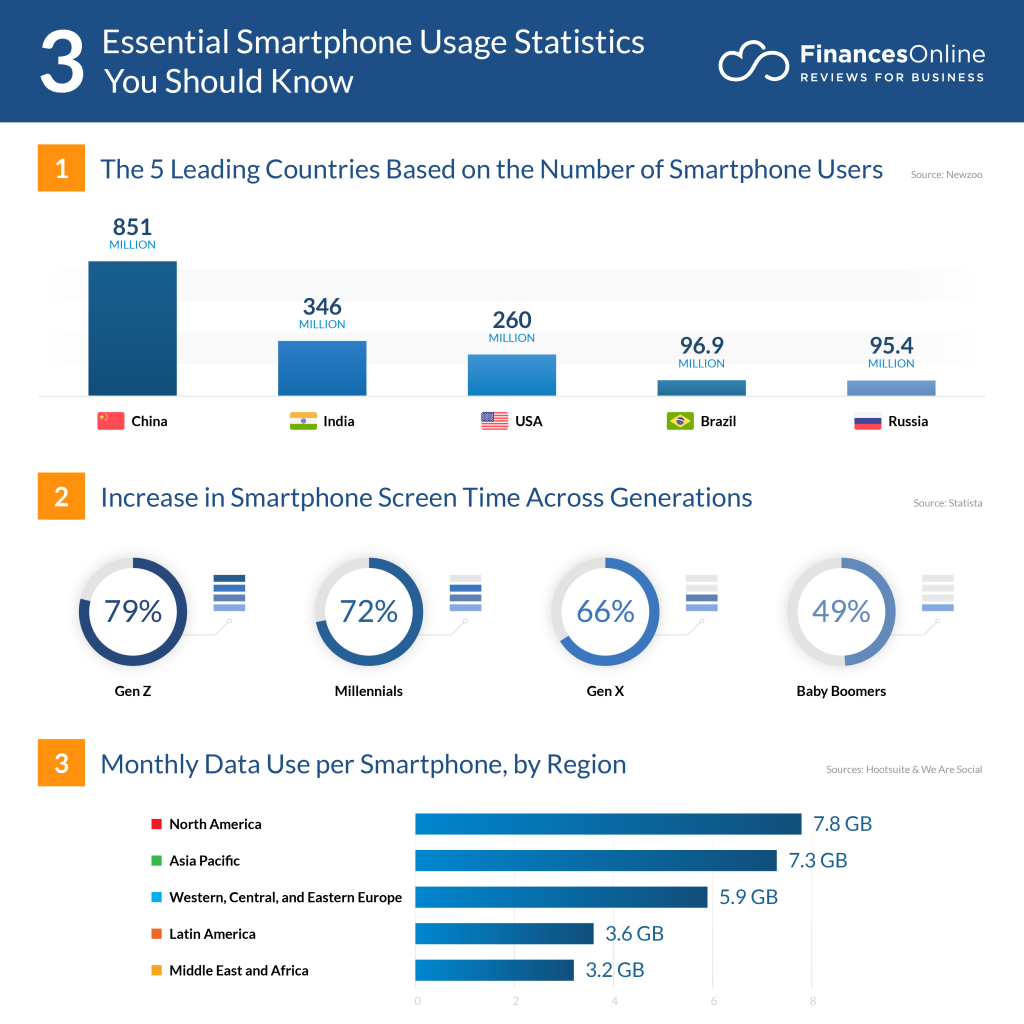
An Illustration showingthestatistics of smartphone usage, Source: FinanceOnline.
Advantages Mobile Marketing
In a world where virtually everyone has a smartphone glued to their hand, mobile marketing has emerged as a transformative force for businesses seeking to connect with their audience in a personalized and immediate way.
1. Ubiquity and Accessibility
The Pocket Powerhouse
One of the greatest advantages of mobile marketing is the sheer ubiquity of smartphones. These devices have become an integral part of daily life, ensuring that your marketing messages are within arm’s reach at all times. Mobile marketing transcends geographical boundaries, providing a global reach that traditional methods often struggle to match.
2. Instantaneous Connectivity
Real-Time Engagement
Mobile marketing enables instantaneous communication with your audience. Whether through SMS, push notifications, or social media apps, you can engage with users in real time. This immediacy is a game-changer, allowing you to deliver time-sensitive promotions, updates, or personalized content directly to the palm of your audience’s hands.
3. Personalization at Scale
Tailoring the Experience
Personalization is not just a buzzword; it’s a cornerstone of effective marketing. Mobile marketing facilitates personalized interactions at scale. Leveraging user data, preferences, and behaviors, you can craft messages and offers that resonate with individual users, fostering a sense of connection and relevance.
4. Enhanced Customer Engagement
From Interaction to Relationship
Mobile marketing opens up a two-way street of communication. Through interactive content, polls, and feedback mechanisms, brands can actively involve their audience. This engagement doesn’t just stop at likes and shares; it lays the foundation for meaningful relationships between brands and consumers.
5. Location-Based Targeting
Where Precision Meets Relevance
Location-based marketing is a potent tool in the mobile marketer’s arsenal. By harnessing GPS data, businesses can send targeted messages to users based on their physical location. Whether it’s promoting a nearby store, offering discounts for local events, or providing geographically relevant information, this form of targeting enhances the contextual relevance of your campaigns.
6. High Open and Click-Through Rates
A Captive Audience
Compared to traditional email marketing, mobile marketing often boasts higher open and click-through rates. With notifications appearing directly on users’ screens, the chances of your message being seen and acted upon are significantly amplified. Crafting compelling messages and CTAs for mobile users can yield impressive conversion rates.
7. Cost-Effectiveness
Doing More with Less
Mobile marketing can be cost-effective compared to traditional advertising channels. Social media platforms, in-app advertising, and SMS campaigns often offer competitive pricing structures. This affordability, coupled with the potential for precise targeting, ensures that businesses of all sizes can harness the power of mobile marketing.
8. Data-Driven Insights
Informed Decision-Making
Mobile marketing platforms provide a treasure trove of data and analytics. From user interactions and engagement metrics to location-based insights, this data enables marketers to make informed decisions. Analyzing these metrics empowers businesses to refine their strategies, optimize campaigns, and adapt to the ever-changing preferences of their audience.
9. Integration with Emerging Technologies
Pioneering the Future
Mobile marketing seamlessly integrates with emerging technologies. Augmented reality (AR), virtual reality (VR), and voice search are all avenues where mobile devices play a pivotal role. By staying at the forefront of these technological trends, businesses can position themselves as innovators, captivating audiences with immersive and cutting-edge experiences.
10. Social Media Dominance
Mobile-First Social Platforms
The rise of mobile has been synonymous with the ascendancy of social media. Platforms like Instagram, TikTok, and Snapchat are inherently mobile-first. Crafting visually compelling content tailored to these platforms allows brands to tap into the immense user bases of social media, driving engagement and brand awareness.
11. Easier Payment Processes
Seamless Transactions
Mobile marketing extends beyond just promotional messages; it includes facilitating transactions. With the prevalence of mobile wallets and integrated payment systems, businesses can streamline the purchasing process. Mobile users can make purchases with just a few taps, reducing friction and increasing conversion rates.
12. Augmented Customer Loyalty
Loyalty Programs Reinvented
Mobile marketing enables innovative loyalty programs. From mobile-exclusive discounts to gamified loyalty apps, businesses can incentivize repeat engagement. The convenience of accessing loyalty rewards directly through a mobile device enhances the overall customer experience.
Mobile marketing is not just a tool in the marketer’s toolkit; it’s a dynamic force that reshapes how businesses connect with their audience. From unparalleled reach and engagement to data-driven insights that fuel continuous improvement, the advantages of mobile marketing are vast and transformative. Please visit our blog page for more insightful blogs and articles about the digital marketing landscape.
As businesses navigate the digital landscape, embracing a mobile-first strategy is not just advantageous—it’s essential for staying relevant, competitive, and ahead of the curve in the evolving world of marketing.
Email marketing optimization remains a powerhouse in the digital marketing landscape, providing direct and personalized communication with your audience. However, the key to unlocking its full potential lies in constant refinement and optimization. Please read the following MailChimp blog: What is email marketing?.
The Foundation of Email Marketing:
In the ever-evolving landscape of digital communication, email marketing stands out as a tried-and-true method for building meaningful connections with your audience. As businesses and individuals navigate the complexities of the online world, understanding the foundational principles of email marketing becomes paramount.
Understanding the Enduring Relevance of Email Marketing
Email marketing’s longevity is a testament to its enduring effectiveness. Unlike fleeting social media posts or transient trends, emails provide a direct line of communication to your audience’s inbox. This reliability has made email a staple in digital marketing strategies, facilitating one-on-one communication, personalized messaging, and targeted outreach.
Defining Clear Objectives
Every successful email marketing campaign begins with a clear set of objectives. Whether your goal is to drive sales, nurture leads, or build brand loyalty, articulating these objectives guides the entire campaign strategy. Clearly defined goals act as a compass, ensuring that each email serves a purpose within the broader context of your marketing strategy.
Building a Quality Email List
The foundation of any successful email campaign lies in the quality of your subscriber list. Growing your list organically, using ethical methods such as opt-in forms and lead magnets, ensures that your audience is genuinely interested in what you have to offer. A quality list not only improves engagement but also helps maintain a positive sender reputation.
Compliance and Best Practices
Respecting your audience’s privacy is not just an ethical consideration; it’s a legal requirement. Understanding and adhering to regulations such as the General Data Protection Regulation (GDPR) and the CAN-SPAM Act is foundational. Permission-based marketing, where subscribers explicitly opt in to receive emails, establishes trust and compliance with these regulations.
Selecting the Right Email Marketing Platform
Choosing the appropriate email marketing platform is akin to selecting the right tool for the job. Factors such as ease of use, scalability, automation capabilities, and analytics should influence your decision. Popular platforms like Mailchimp, Constant Contact, and SendGrid offer a range of features catering to diverse needs.
Crafting Compelling Content
The heart of any email lies in its content. Crafting compelling copy involves more than just promoting products; it’s about telling a story, solving a problem, or delivering value. Attention-grabbing subject lines, concise and engaging copy, and a clear call-to-action are essential elements that contribute to the overall effectiveness of your emails.
Segmentation and Personalization
Not all subscribers are the same, and recognizing this is pivotal. Segmenting your audience based on demographics, behaviors, or preferences allows for targeted communication. Personalization goes beyond addressing subscribers by name; it involves tailoring content to individual interests, purchase history, or engagement level.
Mobile Optimization
With the prevalence of smartphones, optimizing emails for mobile devices is no longer optional. Responsive design ensures that your emails look appealing and function seamlessly on screens of all sizes. Failing to optimize for mobile could result in a significant portion of your audience disengaging from your content.
Analyzing Metrics for Continuous Improvement
Data is the compass that guides your journey in the world of email marketing. Key metrics, including open rates, click-through rates, and conversion rates, provide insights into your campaign’s performance. Regularly analyzing these metrics allows for informed decision-making and iterative improvements to your strategy.
Maintaining Brand Consistency
Consistency is the glue that holds your brand identity together. From the colors and fonts used in your emails to the overall tone and style, maintaining a cohesive brand presence builds recognition and trust among your audience.
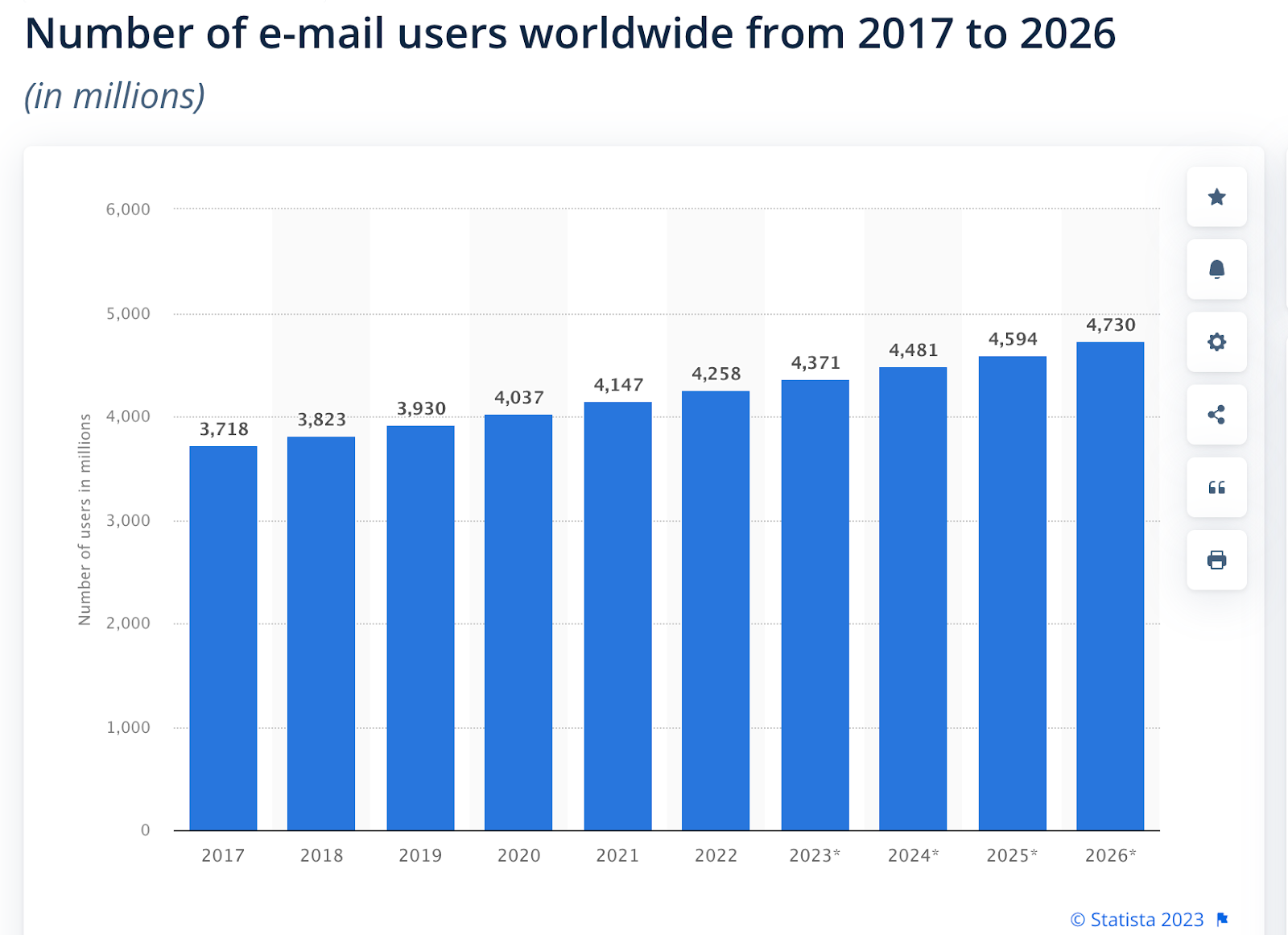
An Illustration of the number of email users worldwide from 2017 to 2026, Source: Statista.
Building a Solid Email Infrastructure
Email marketing success is not solely dependent on crafting compelling content and eye-catching visuals; it begins with a robust and well-structured email infrastructure.
Selecting the Right Email Marketing Platform
Choosing the right email marketing platform is akin to selecting the foundation of your digital home. Consider factors such as:
Ease of Use: Ensure the platform aligns with your team’s skill set.
Scalability: Choose a platform that grows with your business.
Automation Features: Look for tools that streamline your workflow.
Analytics: Opt for platforms offering in-depth analytics for insights.
Popular choices like Mailchimp, SendGrid, and HubSpot provide a range of features catering to diverse needs.
Setting Up Domain Authentication
Domain authentication is the digital handshake that verifies your legitimacy as a sender. Implementing Sender Policy Framework (SPF), DomainKeys Identified Mail (DKIM), and Domain-based Message Authentication, Reporting, and Conformance (DMARC) protocols boosts email deliverability and protects your brand from phishing attacks.
Establishing a Dedicated IP Address
A dedicated IP address provides more control over your email deliverability. While shared IP addresses are common, a dedicated IP allows you to build your sender reputation independently, reducing the impact of others’ sending practices on your emails.
Configuring Feedback Loops
Feedback loops are invaluable mechanisms provided by ISPs (Internet Service Providers) that notify you when subscribers mark your emails as spam. Utilizing feedback loops allows you to identify issues promptly, maintain sender reputation, and enhance the overall quality of your email list.
Implementing List Management Best Practices
Maintaining a clean and engaged email list is fundamental. Regularly remove inactive or unsubscribed users, and implement double opt-in processes to ensure the quality and consent of your subscribers. Poor list hygiene can negatively impact deliverability rates.
Designing Scalable Infrastructure
Consider the scalability of your email infrastructure. As your subscriber base grows, your infrastructure should seamlessly accommodate increased sending volumes without sacrificing performance. Cloud-based solutions often offer the flexibility needed for scalability.
Bounce Rates: Identify and address invalid email addresses promptly.
Open Rates: Understand how well your subject lines and sender name resonate.
Click-Through Rates: Evaluate the effectiveness of your content and calls-to-action.
Continuous monitoring allows you to identify trends, diagnose issues, and optimize your strategy accordingly.
Building a solid email infrastructure is not a one-time task but an ongoing commitment to excellence. By selecting the right tools, adhering to best practices, and prioritizing scalability and compliance, you create a foundation that supports the success and growth of your email marketing endeavors.
Crafting Compelling Email Content:
In the vast sea of digital communication, where inboxes overflow with messages vying for attention, the art of crafting compelling email content has become a linchpin for successful campaigns.
1. Mastering the Art of Subject Lines
The journey to compelling email content begins with the subject line—the gateway to your message.
Curiosity and Clarity: Strike a balance between sparking curiosity and providing clarity. Encourage opens with intriguing phrases while ensuring recipients understand the email’s purpose.
Personalization: Incorporate personalization elements, such as the recipient’s name or location, to make the email feel tailored to the individual.
A/B Testing: Experiment with different subject lines through A/B testing to discover what resonates most effectively with your audience.
2. Crafting Irresistible Copy
The body of your email is where the magic happens. Persuasive copy is the key to engaging and converting your audience.
Clear and Concise Messaging: Get to the point quickly. Busy recipients often skim through emails, so ensure your message is clear and easily digestible.
Storytelling: Weave a narrative that connects emotionally with your audience. Whether it’s a success story, a customer testimonial, or a behind-the-scenes glimpse, storytelling adds a human touch.
Addressing Pain Points: Identify and address the pain points or challenges your audience faces. Position your product or service as the solution, providing tangible benefits.
Incorporating Urgency and Scarcity: Create a sense of urgency or scarcity to prompt immediate action. Limited-time offers or exclusive deals can drive conversions.
3. Visual Appeal and Multimedia Integration
Emails are not just about text; visual elements play a crucial role in capturing attention.
High-Quality Imagery: Use high-resolution images that align with your brand and evoke the desired emotions. Avoid clutter and opt for clean, visually appealing designs.
Interactive Content: Experiment with interactive elements, such as polls, quizzes, or GIFs, to enhance engagement and create a memorable user experience.
Video Integration: Leverage the power of video content. Embed videos or include compelling video thumbnails to increase click-through rates.
4. Crafting an Effective Call-to-Action (CTA)
Your call-to-action is the guiding beacon, directing recipients on the desired path.
Clarity and Directness: Clearly articulate what action you want the recipient to take. Whether it’s making a purchase, downloading a resource, or signing up for an event, be direct.
Strategic Placement: Position your CTA prominently within the email. Experiment with different placements and colors to ensure it stands out.
Compelling Language: Use persuasive language that conveys the benefits of taking the desired action. Instead of “Submit,” consider phrases like “Get Started” or “Unlock Your Benefits.”
5. Personalization Beyond the Name
Move beyond basic personalization by tailoring content to individual preferences and behaviors.
Dynamic Content: Implement dynamic content that adapts based on user data. Showcase products or recommendations tailored to each recipient’s interests.
Behavioral Triggers: Set up triggered emails based on user behavior. Whether it’s cart abandonment emails or personalized recommendations, respond to actions in real-time.
6. Mobile Optimization
Given the prevalence of mobile devices, optimizing your email content for mobile is non-negotiable.
Responsive Design: Ensure your emails are visually appealing and functional across various screen sizes. Responsive design adapts layouts for optimal viewing on both desktop and mobile devices.
Conciseness for Mobile Users: Recognize that mobile users often have limited attention spans. Craft concise and scannable content that delivers the core message quickly.
Crafting compelling email content is an art that combines creativity, strategy, and a deep understanding of your audience. By mastering the nuances of subject lines, persuasive copy, visual elements, and personalization, you can create emails that not only grab attention but also drive meaningful engagement and conversions. Keep testing, iterating, and refining your approach to stay ahead in the dynamic world of email marketing.
Analyzing and Optimizing Email Marketing Campaigns:
In the realm of email marketing, the journey to success is paved with data. To refine your strategy, boost engagement, and maximize conversions, a robust process of analyzing and optimizing campaigns is paramount.
1. Leveraging Analytics Tools
Google Analytics Integration
Integrate your email marketing platform with Google Analytics to gain a comprehensive view of user behavior beyond email opens and clicks. Track website visits, conversions, and user journeys originating from your email campaigns.
Email Marketing Platform Analytics
Make the most of built-in analytics tools provided by your email marketing platform. Monitor key metrics such as open rates, click-through rates (CTR), conversion rates, and unsubscribe rates.
Custom Analytics Dashboards
Create custom dashboards that consolidate relevant metrics for quick analysis. Tools like Klipfolio or Tableau allow you to visualize data from multiple sources, providing a holistic perspective.
2. Key Metrics to Monitor
Open Rates
Analyze open rates to gauge the effectiveness of your subject lines and overall email appeal. Experiment with different subject line strategies and monitor how they impact open rates over time.
Click-Through Rates (CTR)
CTR measures how many recipients clicked on links within your emails. Analyze CTR to assess the relevance of your content and the effectiveness of your calls-to-action (CTAs).
Conversion Rates
Track conversion rates to understand how many recipients took the desired action after clicking on your email. This could be making a purchase, signing up for a webinar, or downloading a resource.
Bounce Rates
High bounce rates indicate potential issues with your email list quality. Monitor bounce rates and regularly clean your list to maintain deliverability and sender reputation.
3. A/B Testing for Continuous Enhancement
Subject Line Testing
Conduct A/B tests on subject lines to identify what resonates best with your audience. Test variations in length, tone, and personalization to optimize open rates.
Content Variations
Experiment with different content elements, such as images, copy, and CTAs. A/B test various layouts and messaging styles to identify the most engaging combinations.
Send Time Optimization
Test different send times to determine when your audience is most responsive. Consider time zone variations and schedule emails for maximum impact.
4. Iterative Improvement Strategies
Continuous Learning
Foster a culture of continuous learning within your marketing team. Regularly review analytics, share insights, and discuss findings to inform future strategies.
Iterative Testing
Use insights gained from previous campaigns to inform future A/B tests. Continuously iterate on successful elements and refine those that underperformed.
Audience Segmentation Refinement
Refine audience segments based on performance data. Identify high-performing segments and tailor content to their preferences and behaviors.
5. Feedback Loops and Customer Surveys
Utilizing Feedback Loops
Leverage feedback loops provided by ISPs to understand subscriber sentiments. Monitor feedback loops for spam complaints and address issues promptly.
Customer Surveys
Gather direct feedback from your audience through surveys. Understand their preferences, expectations, and pain points to tailor your email content accordingly.
Email marketing optimization is not a one-time task but an ongoing journey of refinement and innovation. By integrating advanced segmentation, dynamic personalization, and cutting-edge technologies like A.I, you can create campaigns that not only resonate with your audience but also drive meaningful results. Please visit our blog page for more insightful blogs and articles about the digital marketing landscape.
Stay curious, experiment boldly, and let the data guide you on the path to mastering the art of continuous email marketing optimization.
In the ever-evolving landscape of digital marketing, content marketing stands tall as a formidable force that goes beyond mere promotional tactics. It is a strategic approach that involves creating and distributing valuable, relevant, and consistent content to attract and engage a clearly defined audience. Please read the following MailChimp blog: What is content marketing?.
.
Understanding Content Marketing
1. Defining Content Marketing:
Content marketing involves creating and distributing valuable, relevant content to attract and engage a target audience. It goes beyond traditional advertising, focusing on building long-term relationships through storytelling and information sharing.
2. Key Elements of Content:
Relevance: Content should address the needs and interests of your audience.
Value: Provide information, entertainment, or solutions that enrich the audience’s experience.
Consistency: Maintain a regular publishing schedule to keep your audience engaged.
Digital Foundations: Content marketing serves as the cornerstone for building a robust online presence. Through various channels like websites, blogs, and social media, businesses can showcase their expertise and establish authority within their industry.
SEO Enhancement: Search engines love fresh, relevant content. Regularly updating your website with high-quality content enhances its visibility in search engine results, driving organic traffic.
2. Connecting with the Target Audience:
Understanding User Intent: Content marketing allows businesses to create content tailored to the needs, preferences, and pain points of their target audience. By addressing user intent, brands can forge stronger connections with their customers.
Engagement and Interaction: Engaging content sparks conversations. Whether through blog comments, social media shares, or interactive elements, content marketing facilitates meaningful interactions between brands and their audience.
3. Building Brand Authority and Trust:
Educational Content: Brands that share valuable insights and knowledge through content position themselves as industry authorities. Educational content builds trust and credibility.
Authenticity Matters: Consumers appreciate authenticity. Content marketing provides an avenue for brands to share their values, stories, and behind-the-scenes glimpses, fostering trust among their audience.
4. Nurturing Leads and Driving Conversions:
Lead Magnet Content: Ebooks, whitepapers, and webinars are valuable resources that attract potential customers. This lead magnet content nurtures leads through the sales funnel.
Conversion-Optimized Content: Tailoring content for each stage of the buyer’s journey ensures that potential customers receive the right information at the right time, increasing the likelihood of conversions.
5. Diversifying Content Formats:
Visual Appeal: Content marketing is not confined to text. Infographics, videos, podcasts, and interactive content provide diverse ways to convey messages, catering to varied audience
preferences.
Adapting to Trends: Staying ahead in the digital landscape requires adapting to emerging trends. Content marketing allows brands to experiment with new formats and stay relevant.
6. Amplifying Social Media Presence:
Social Sharing: Compelling content encourages users to share it on social media platforms, amplifying a brand’s reach.
Community Building: Social media platforms serve as hubs for community engagement. Content marketing fosters a sense of community around a brand.
7. Measuring and Analyzing Performance:
Data-Driven Insights: Content marketing in the digital age is highly measurable. Analytics tools provide insights into content performance, user behavior, and conversion metrics.
Continuous Optimization: Armed with data, brands can continuously optimize their content strategy, focusing on what works best for their audience.
8. Adapting to Evolving Consumer Behavior:
Mobile Optimization: As users increasingly consume content on mobile devices, content marketing strategies need to be optimized for mobile platforms.
Voice Search Optimization: With the rise of voice-activated devices, content needs to be structured to align with how users phrase voice search queries.
In the dynamic realm of digital marketing, content marketing emerges not just as a tool but as the driving force that shapes brand narratives, fosters relationships, and fuels business growth. It’s not merely about what you sell but about the stories you tell, the value you provide, and the connections you build.
By embracing the power of content, businesses can navigate the digital landscape with resilience, creativity, and an unwavering commitment to meeting the evolving needs of their audience.
World cases of Content Marketing
Content marketing has been successfully implemented by a multitude of companies globally, spanning various industries. Let’s explore some noteworthy world cases that showcase the diverse applications and effectiveness of content marketing strategies.
1. Red Bull: Creating a Lifestyle Brand:
Approach: Red Bull has transformed itself into more than just an energy drink; it’s a lifestyle brand. Through its online magazine, “Red Bull Media House,” the company creates and curates content related to extreme sports, adventure, and lifestyle.
Impact: Red Bull’s content marketing has fostered a community around its brand. Their videos, articles, and events don’t directly promote the drink but instead associate the brand with a high-energy, adventurous lifestyle.
2. Coca-Cola: Sparking Happiness:
Approach: Coca-Cola’s content marketing strategy revolves around the central theme of happiness. The “Share a Coke” campaign is a prime example where personalized bottles with names or terms like “family” and “friends” encourage customers to share moments of joy.
Impact: By connecting with consumers on an emotional level, Coca-Cola’s content marketing reinforces positive associations, making the brand a symbol of shared happiness.
3. Dollar Shave Club: Disrupting the Industry with Humor:
Approach: Dollar Shave Club disrupted the razor industry by using humor and relatable content. Their viral video featuring the founder humorously explaining the benefits of their subscription service garnered immense attention.
Impact: The video’s success not only led to widespread brand recognition but also emphasized how content that entertains and resonates with the audience can drive customer acquisition.
4. Airbnb: Leveraging User-Generated Content:
Approach: Airbnb encourages users to share their travel experiences through user-generated content. The “Experiences” section on their website features stories, photos, and recommendations from hosts and guests.
Impact: By showcasing authentic stories and visuals, Airbnb’s content marketing leverages the power of user-generated content to build trust and inspire potential travelers.
5. HubSpot: Providing In-Depth Resources:
Approach: HubSpot, a leader in inbound marketing, provides a wealth of educational content through blogs, ebooks, webinars, and guides. Their content covers diverse aspects of digital marketing, serving as a valuable resource for businesses.
Impact: HubSpot’s content marketing strategy establishes the brand as an authority in the marketing space. Their educational content also acts as a lead magnet, attracting businesses looking to enhance their marketing efforts.
6. GoPro: Empowering User Creativity:
Approach: GoPro empowers its users to become content creators. The company encourages customers to share their GoPro-captured adventures, creating a vast library of user-generated content that showcases the capabilities of their cameras.
Impact: GoPro’s content marketing relies heavily on the visual appeal of user-generated content, turning customers into brand ambassadors and demonstrating the real-world applications of their products.
7. Nike: Inspiring with Powerful Storytelling:
Approach: Nike is renowned for its powerful storytelling. Their content often revolves around inspiring narratives, such as the “Just Do It” campaign, which focuses on athletes overcoming challenges to achieve greatness.
Impact: Nike’s content marketing doesn’t just sell products; it sells a lifestyle and a mindset. The brand’s storytelling resonates with audiences globally, creating a strong emotional connection.
8. Buffer: Transparent and Educational:
Approach: Buffer, a social media management platform, practices transparent content marketing. They openly share details about their company culture, revenue, and even salaries. Additionally, their blog provides valuable insights into social media and digital marketing.
Impact: Buffer’s transparent approach builds trust with users. Their educational content also positions the brand as a thought leader, attracting businesses seeking social media expertise. Please visit our blog page for more insightful blogs and articles about the digital marketing landscape.
Conclusion
These global cases demonstrate the versatility and effectiveness of content marketing across different industries. From lifestyle branding to disruptive humor and user-generated content, these examples showcase how content can be a driving force in shaping brand perception, fostering community, and driving business success.